

Views: 0 Author: Site Editor Publish Time: 2026-09-02 Origin: Site


Unscheduled downtime and maintenance cost heavy-duty material processing operations thousands of hours annually. Traditional rigid screen media creates severe operational bottlenecks on site. When you process abrasive, damp, or difficult materials, you immediately face rapid blinding and pegging. Rigid screens force the machine structure to absorb massive impact forces, leading to structural fatigue, cracked cross-tubes, and premature bearing failure. Moving from rigid vibration to flexible agitation changes the mechanics of your deck. A polyurethane flip flow screen acts as a specialized engineering solution designed to absorb impact, reduce structural wear, and maintain continuous throughput. It is not a universal fix. Instead, it solves specific screening challenges where damp or clay-heavy feeds plug standard mesh. Upgrading to this flexible media requires targeted mechanical interventions to maintain continuous yield and protect your vibrating equipment.
Impact Absorption: Polyurethane’s high elasticity absorbs kinetic energy, transferring less destructive vibration to the screen’s sub-frame and bearings.
Downtime Reduction: The dual-vibration "trampoline" effect naturally rejects sticky particles, drastically reducing manual cleaning intervals.
Wear Resistance: Compared to wire mesh or standard rubber, polyurethane offers a superior wear life and load-bearing capacity in high-abrasion applications, lowering annualized replacement costs.
Retrofit Viability: Upgrading to flexible media requires specific tensioning and fastening evaluations, but offers a measurable ROI for operations struggling with damp or clay-heavy feeds.
Moisture changes how bulk materials behave on a vibrating deck. When moisture levels hit the 5% to 8% range, capillary action causes fine particles to adhere to traditional wire mesh or perforated steel plates. Surface tension binds these fines together, and they quickly bridge the open apertures of rigid screen media. This rapid blinding halts material separation entirely. Effective wet material screening requires breaking this surface tension. Rigid screens rely solely on the machine's stroke and gravity. They lack the localized acceleration needed to dislodge sticky, clay-heavy aggregates. When a deck blinds, operators must halt production, lock out the machine, and manually clear the decks with scrapers and hammers. This reactive maintenance destroys production schedules.
Rigid screen media transfers kinetic energy directly into the machine frame. Heavy aggregates dropping onto steel or thick rubber mats send shockwaves through the entire structure. The machine bears the brunt of this continuous material impact. When a deck blinds, the material builds up and creates a static dead load. The eccentric shaft continues trying to throw this massive, unmoving weight at 800 RPM. This direct energy transfer accelerates mechanical fatigue across multiple components.
Side plates develop stress fractures around the huck bolts.
Cross-tubes crack under unmitigated vibration and heavy static loads.
Spherical roller bearings endure excessive radial loads and overheat.
Drive motors draw higher amperage to maintain the required stroke.
Coil springs fatigue prematurely due to uneven load distribution.
Over time, these rigid media limitations result in catastrophic structural failures and require complete machine rebuilds.
Screen failure operates as a systemic reliability issue across the entire plant. A blinded screen deck creates a severe cascading effect on downstream equipment. When apertures plug, undersized material carries over into the oversize chute. Crushers then receive improperly sized, fine-heavy material. Cone crushers are designed to crush rock, not compress wet fines. Feeding wet fines into a cone causes ring bounce, excessive hydraulic pressure, and frequent stalling. Conveyor belts handle higher recirculating loads, which accelerates belt wear and increases energy consumption. Maintaining open screen area directly dictates the mechanical health of all subsequent processing stages.
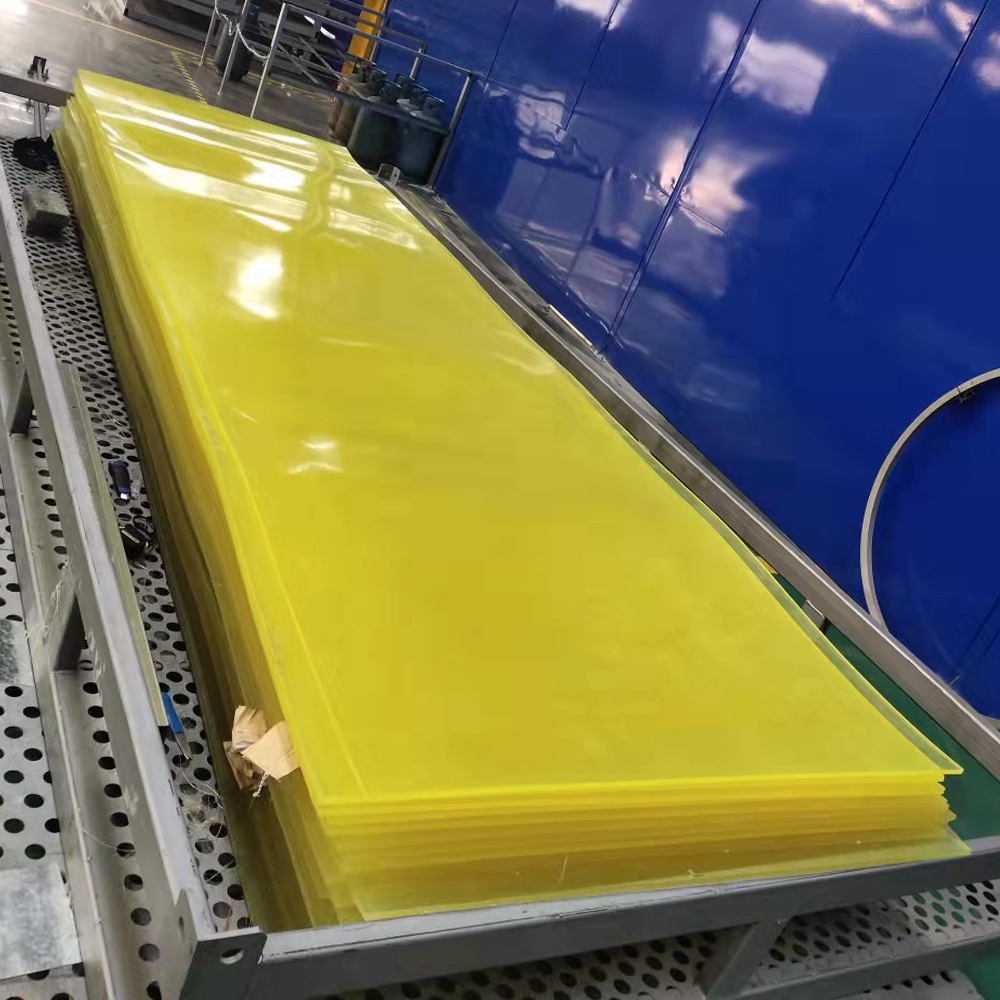
Polyurethane possesses specific material properties suited for heavy impact. Cast at hardness levels typically between 60 and 90 Shore A, its synthetic polymer structure offers high elasticity combined with extreme toughness. When heavy aggregate falls onto the deck, the polyurethane acts as a massive shock absorber. The material deflects upon impact. This flexion dissipates the kinetic energy of the falling rock before it reaches the steel sub-frame. By absorbing this energy at the media level, the screen protects the underlying machine structure. The mats handle continuous impact from 6-inch minus rock without permanent deformation or gouging.
Flexible agitation relies on a dual-mass system. The main machine frame moves at a relatively low frequency, typically generating around 5G of acceleration. Inside this frame, dynamic crossbeams move in opposition to static crossbeams. The flexible polyurethane mats attach between these beams. As the beams move, the mats stretch and relax at high frequencies. This creates a trampoline effect. The polyurethane mats achieve massive acceleration rates, sometimes reaching up to 50G. The primary machine structure never experiences these extreme forces. The high-intensity vibration remains isolated entirely within the flexible screen media.
This localized high-frequency vibration transfers constant kinetic energy directly into the material particles. The rapid stretching and relaxing of the mats throw the material upward. Particles remain suspended in a fluidized bed. This constant agitation prevents heavy, damp material from settling on the deck. When material settles on a rigid screen, it deadens the machine stroke. The trampoline effect ensures the material bed remains active and aerated. Fines easily stratify through the suspended larger particles, find the bottom of the material bed, and pass through the open apertures.
Isolating the high G-forces within the polyurethane mats preserves the machine's primary drive system. Eccentric shafts and bearings handle only the low-frequency movement of the main frame. They are completely spared from generating or enduring the 50G acceleration required to process sticky materials. This mechanical separation drastically extends the lifespan of core components. Drive motors draw less amperage because they do not have to force a rigid frame through a heavy, deadened bed of wet clay. Bearing temperatures remain lower, and grease intervals stabilize. The localized agitation strategy directly translates to extended mechanical reliability for the entire vibrating screen.
The continuous stretching and contracting of the polyurethane apertures physically eject wedged particles. When a near-size rock pegs into a hole, the subsequent stretching of the mat elongates the aperture. A square hole temporarily becomes a rectangle. This deformation breaks the friction holding the rock. The upward thrust then ejects the particle. This defines the exact mechanics of a true self cleaning mining screen. The violent snapping action prevents sticky fines from bridging the gaps. Surface tension cannot hold damp material together under 50G of acceleration. The deck remains open and functional without manual intervention.
Flexible media systems deliver higher operational uptime and superior screening accuracy. Field data shows flip flow screens consistently achieve around 77% efficiency in difficult, high-moisture applications. Standard circular vibrating screens often stall at roughly 62% efficiency under similar conditions. This gap in performance translates directly to product quality. Higher efficiency means fewer missed pieces in the final product pile. Accurate separation ensures downstream processes receive the exact material specifications required. Operations produce cleaner aggregates, meet strict DOT specifications, and recover more valuable fines from waste streams.
Efficiency gains compound over a full production shift. Rigid screens degrade in performance hour by hour as they slowly blind. A wire mesh deck might start a shift at 80% open area but drop to 30% by mid-day. Flip flow media maintains its high open-area percentage continuously. The self-cleaning action ensures the yield remains constant from the first hour to the last. Operations avoid the interrupted maintenance cycles required to clean rigid decks. This continuous yield maximizes daily tonnage and stabilizes plant feed rates, allowing operators to run the plant at a steady state rather than constantly adjusting feeders to compensate for blinded screens.
Manual screen cleaning carries high hidden costs and significant safety risks. Clearing a blinded deck requires strict lockout/tagout procedures that consume valuable production time. Maintenance personnel often face confined space entry permits. They spend hours manually scraping heavy, wet clay from wire mesh using pry bars and sledgehammers. Eliminating this requirement drastically improves overall site safety. Workers are removed from hazardous positions inside the machine and avoid exposure to silica dust generated during manual cleaning. Labor allocation becomes much more efficient. Maintenance teams focus on preventative tasks rather than reactive, physically demanding deck cleaning.
Selecting the right screen media requires an objective evaluation of material properties. Polyurethane excels in specific conditions but is not a universal replacement for all applications. You must match the media to the feed material.
Media Type | Abrasion Resistance | Flexibility / Elasticity | Best Application Environment | Primary Limitations |
|---|---|---|---|---|
Polyurethane | Excellent | High (Continuous flexing) | Wet, sticky, high-fines material | Vulnerable to extreme high temperatures |
Rubber | Good | Moderate | Heavy impact, dry scalping | Lower open area, prone to blinding with wet fines |
Steel Wire | Moderate | None (Rigid) | Dry, abrasive aggregates | Rapid blinding with damp material, high structural wear |
Perforated Plate | High | None (Rigid) | Massive top-size scalping, high heat | Lowest open area, heavy static weight on frame |
Polyurethane offers superior bearing capacity and tear resistance during continuous repeated flexing. It outlasts standard rubber in high-abrasion, wet applications. However, steel remains necessary for extreme high-temperature processing or massive top-size scalping where heavy boulders would gouge flexible mats.
Modern manufacturing allows for highly customized aperture designs. A flip flop screen panel can feature taper-slot, square, or round openings. Engineers select the aperture shape based on the specific cut size and the physical shape of the feed material. Taper-slot designs prevent pegging of elongated or slabby particles. Square apertures maximize open area for high-volume throughput. Round apertures provide precise sizing for strict product specifications. The polyurethane formulation ensures these custom shapes maintain structural integrity even under 50G acceleration.
The modularity of modern polyurethane panels streamlines maintenance. Unitary flexible screen mats utilize various fastening systems to secure the media to the dynamic crossbeams. Pin-and-sleeve systems allow for rapid, tool-less installation. Wedge-style fasteners provide secure tensioning for heavier loads. Bolt-down systems offer maximum security for highly abrasive applications. These modular designs impact the speed of change-outs during scheduled maintenance. Crews replace only the worn sections rather than an entire deck.
Clear the deck of all residual material and lock out the machine.
Remove the worn modular panel by extracting the center pins or loosening the wedge bolts.
Inspect the dynamic and static crossbeams for wear or structural cracking.
Align the new polyurethane panel over the fastening holes.
Insert the pins and drive the sleeves flush, or torque the bolts to OEM specifications.
Verify the panel sits flush and maintains proper tension across the span.
Converting a standard linear screen to a flip flow system involves strict engineering realities. True flip flow action requires a dual-mass or specific eccentric drive system. Standard screens often lack the dynamic crossbeams necessary to stretch the mats. Retrofitting requires dynamic load calculations to ensure the existing frame can handle the modified motion. Deck spacing must accommodate the upward throw of the trampoline effect. Because the flexible mats throw material much higher than rigid media, you need adequate clearance between decks to prevent material from choking the machine. In many cases, installing specialized modular retrofit decks works well. In other scenarios, a full machine replacement proves more viable than attempting a complex media retrofit on an aging frame.
Improper tensioning represents the primary operational risk when utilizing flexible media. The mats must stretch and relax precisely. Under-tensioning leads to media flapping. The polyurethane strikes the crossbeams loosely, causing premature wear, reduced material throw, and poor stratification. Over-tensioning restricts the flip-flow action entirely. It places excessive stress on the fastening points and tears the polyurethane. Maintenance teams must calibrate tensioning according to OEM specifications. Precise calibration ensures the dual-vibration mechanics function correctly without destroying the screen panels.
Upgrading to flexible media requires a shift in maintenance protocols. Operators must abandon traditional wire-brushing and scraping techniques. Training focuses on visual inspections and mechanical monitoring. Maintenance teams need to monitor localized wear patterns across the deck, particularly near the feed box where impact is highest. They must ensure fastening integrity remains tight after initial installation. Verifying load-bearing limits prevents operators from overloading the flexible mats with oversized rocks. Understanding these new maintenance indicators ensures the continuous reliability of the screening equipment.
Initiate a comprehensive material flow audit to identify exact moisture levels and pegging frequencies on your current decks.
Consult with an OEM to perform a dynamic load analysis on your existing screen structures before attempting a retrofit.
Conduct a pilot test using a single deck retrofit to measure actual efficiency gains on your specific material.
Update maintenance training protocols to focus on tensioning calibration and visual wear inspections rather than manual cleaning.
A: Polyurethane typically outlasts wire mesh by several multiples in wet or fine applications. The exact lifespan depends on material abrasiveness, drop height, and proper tensioning. Its high tear resistance and ability to absorb impact prevent the rapid degradation seen in rigid steel wires.
A: The panel utilizes a high-acceleration stretching action. This trampoline effect breaks the surface tension of wet materials. It transfers constant kinetic energy to the particles, keeping them suspended and preventing damp fines from building up and blinding the apertures.
A: Flip flow screens maintain higher continuous efficiency, often exceeding 75%. Standard linear and circular screens typically degrade in performance over a shift as they blind. Flexible media prevents this blinding, ensuring consistent separation accuracy from start to finish.
A: Yes, polyurethane is highly abrasion-resistant and possesses excellent bearing capacity. However, operators must manage the maximum feed size and drop velocity. Dropping massive, sharp boulders directly onto flexible mats can cause gouging and premature tearing.
A: True flip flow action requires a dual-mass or specific eccentric drive system. Standard screens often require significant modification or specialized modular retrofit decks to accommodate the dynamic crossbeams needed to stretch the flexible mats.
A: Proper tension relies on using OEM-specified fastening systems. Maintenance teams must conduct regular visual inspections. They ensure the mats stretch correctly to create the trampoline effect without over-stretching, which stresses the fasteners and tears the polyurethane.


