

Views: 0 Author: Site Editor Publish Time: 2026-09-04 Origin: Site


Unplanned downtime in mining operations drains profitability fast. When a main extraction belt stops, the entire processing plant grinds to a halt. Conveyor system failures frequently stem from extreme abrasion, heavy impact, and continuous operation. Standard industrial parts degrade quickly in hard rock, iron ore, and copper environments. Specifying inadequate hardware leads to accelerated wear across the entire system. It causes excessive carryback, catastrophic belt damage, and severe productivity bottlenecks. You need a rigorous, engineering-led approach to specify heavy-duty mining conveyor components. Upgrading a facility requires more than just replacing broken parts. It requires analyzing material flow, kinetic energy, and environmental hazards. We wrote this technical evaluation guide to help you select components correctly. It focuses on maximizing lifecycle value, system reliability, and overall material throughput.
Material Science Dictates Lifespan: Selecting the right metallurgy, ceramics, or engineered polymers is non-negotiable for surviving high-abrasion and high-impact zones.
Holistic System Compatibility: Upgrading a single component (like a high-tensile belt) without addressing supporting hardware (idlers, impact beds) shifts the failure point rather than solving the problem.
Lifecycle Value Over Initial Price: High-wear environments demand a long-term evaluation model; premium components reduce maintenance intervals and labor costs, offsetting higher upfront capital expenditures.
Proactive Carryback Management: Properly specified belt cleaning equipment and containment accessories are critical for preventing premature wear on the entire conveyor structure.
Mining conveyor systems feature specific zones where mechanical stress peaks. Loading zones endure the highest immediate trauma. Heavy ore drops directly onto the belt here, transferring massive kinetic energy. Transfer points redirect material flow, creating immense friction against chute walls and liners. Discharge chutes handle the final exit of abrasive materials, often acting as a bottleneck if not designed correctly. Falling sediment and jagged ore exert maximum force in these localized areas. Mapping these critical failure points helps engineers allocate durable materials where they matter most. You cannot treat the entire conveyor line uniformly. A tail pulley enclosure requires different protection than a mid-stream idler frame. High-wear zones require specialized hardware to survive daily abuse. We look for areas with high drop heights, sharp directional changes, and high material velocity.
Component failure in mining rarely happens without warning. Severe abrasion from jagged ore slowly grinds away steel and rubber surfaces. You will see chute liners thin out and idler shells wear through until they slice the belt. Structural deformation occurs when heavy impact loading overwhelms standard frames. Bearings seize when fugitive dust and moisture bypass inadequate seals. Heat buildup from friction destroys polyurethane compounds on scrapers and skirting. Recognizing these mechanical realities allows maintenance teams to predict failures before they cause a catastrophic shutdown. You must specify materials designed to counter these exact physical threats. Ignoring these failure modes guarantees frequent system shutdowns and emergency splicing jobs.
The physical layout of a mine drastically alters dynamic loads. Short, steep inclines require high-traction components and robust anti-rollback mechanisms. Multi-kilometer overland routes place massive continuous tension on the system. Elevation changes increase the kinetic energy required to move material uphill or brake it downhill. Topography dictates motor sizing, belt tensile strength, and braking requirements. A component rated for a flat, short run will fail rapidly on a steep incline. You must match component specifications to the exact topographic profile of the conveyor. Long overland belts experience significant thermal expansion and contraction, requiring specialized take-up assemblies.
A successful specification relies on measurable operational improvements. Predictable wear rates allow for scheduled maintenance rather than emergency repairs. Standardized replacement intervals reduce inventory complexity and free up warehouse space. A noticeable reduction in fugitive material indicates proper sealing and cleaning. Sustained high-capacity throughput proves the system handles the required tonnage without bogging down. Components must work together to achieve these metrics. Success means the conveyor runs continuously between planned shutdown windows. We measure success by the reduction in unscheduled maintenance hours and the increase in overall equipment effectiveness.
Material science drives component longevity in high-wear applications. Abrasion Resistant (AR) steel plates handle moderate impact and sliding wear effectively. AR400 and AR500 are common baselines for chute liners. Chromium carbide overlays offer superior hardness for extreme abrasion zones where standard AR steel wears out in weeks. High-density polyurethane provides a flexible, wear-resistant surface for skirting and scrapers. You should specify alumina ceramic tiles for areas experiencing extreme sliding abrasion without heavy impact. Ceramics shatter under high impact but outlast steel in sliding friction by a massive margin. Selecting the right surface material prevents premature degradation and extends the life of the underlying steel structures.
Material Type | Best Application | Impact Resistance | Abrasion Resistance |
|---|---|---|---|
AR400 / AR500 Steel | General chutes, hoppers, deflectors | High | Moderate |
Chromium Carbide Overlay | High-wear transfer points, rock boxes | Moderate | High |
High-Density Polyurethane | Skirting, belt cleaners, impact pads | High (Flexible) | Moderate |
Alumina Ceramic Tiles | Sliding abrasion zones, wet chutes | Low | Extreme |
Transfer points generate massive kinetic energy. Heavy ore falling from height creates shockwaves that destroy standard rollers. Components must absorb this energy without transferring stress to the belt carcass. Structural frames must remain rigid while contact surfaces flex. Impact beds utilize rubber shock absorbers to dissipate force. Rigid steel frames hold these absorbers in place. This combination protects the belt from puncture and internal delamination. It also prevents the conveyor structure from bending or cracking under continuous heavy loads. We look for impact beds with heavy-duty steel supports and easily replaceable slide bars.
Heavy ore transport over long distances requires extreme tension. Component load ratings must match these requirements. Pulleys, shafts, and bearings bear the brunt of this tension. Undersized components will snap or deform under load, causing catastrophic failure. You must evaluate the maximum operating tension of the system, often measured in Pounds per Inch of Width (PIW). Specify components with safety factors built into their load capacities. High tensile strength prevents elongation and maintains structural integrity during startup and fully loaded operations. Shaft deflection must remain within strict tolerances to prevent bearing failure.
Mining environments destroy unprotected machinery. Highly particulate and corrosive environments attack moving parts constantly. Advanced sealing technologies are mandatory for any rotating equipment. Labyrinth seals create a tortuous path that blocks dust and moisture. They protect bearing housings from contamination. Grease-purged taconite seals offer an additional layer of defense in the harshest iron ore applications. Environmental resilience also includes UV resistance for outdoor belts and corrosion-resistant coatings for steel frames. Protecting internal mechanisms ensures the equipment reaches its designed mechanical lifespan without premature seizure.
The belt carcass acts as the backbone of the entire system. Steel cord belts dominate long-distance conveying and high-tension applications. They offer minimal elongation, which is critical for maintaining tension over kilometers. Heavy-duty, multi-ply fabric belts serve a different purpose. They excel in shorter runs requiring high flexibility and impact puncture resistance. Fabric belts absorb shock better than steel cords when large rocks hit the belt. Top cover compounds require equal attention. Engineers formulate these rubber covers specifically for extreme abrasion and gouge resistance. Proper carcass and cover selection prevents catastrophic belt tearing and edge fraying.
High-drop loading zones destroy traditional impact idlers quickly. The rollers bend, the bearings seize, and the belt sags. Impact beds provide a superior alternative. They offer continuous support across the loading zone. This prevents the belt from sagging between rollers, which is a primary cause of material spillage. Impact bars utilize a specific material stack for maximum protection. UHMW top covers provide a low-friction sliding surface. Rubber shock absorbers sit beneath the UHMW to dissipate falling kinetic energy. Aluminum fastening profiles secure the bars to the steel cradle. This design absorbs the force of falling material while protecting the belt from puncture.
Idlers support the belt and the material load along the entire conveyor length. You must specify rigorous criteria for troughing, return, and training idlers. Heavy ore transport demands thick steel shells to resist abrasion from fugitive dust. Large shaft diameters prevent deflection under heavy loads. High-capacity bearing load ratings ensure smooth rotation despite constant downward pressure. Standard idlers fail rapidly in these conditions, leading to seized rollers that slice through the belt cover. Upgrading to heavy-duty conveyor wear components reduces friction, lowers energy consumption, and prevents belt misalignment.
Pulley selection directly impacts belt traction and tracking. Drive pulleys transmit motor torque to the belt. Tail pulleys provide tension at the loading end. Snub pulleys increase the wrap angle on the drive pulley to prevent slippage. Lagging protects the pulley shell and increases friction. Rubber lagging works well in dry, moderate-tension applications. Ceramic lagging provides superior drive traction in wet mining conditions. The ceramic tiles shed water and mud, preventing belt slip. Choosing the correct lagging extends the life of both the pulley and the belt, while reducing the required take-up tension.
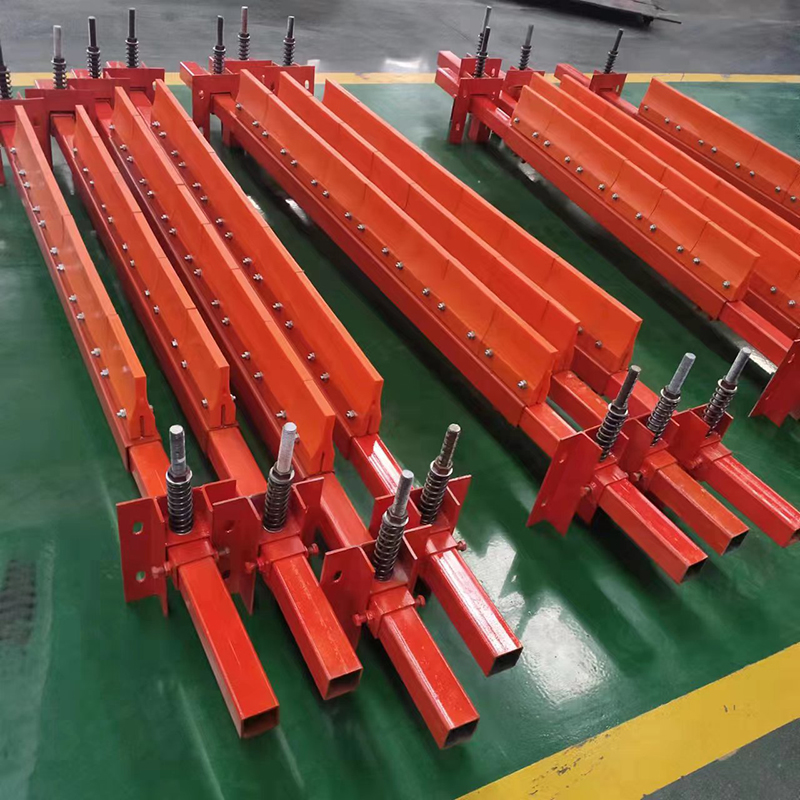
Carryback destroys idlers and causes severe tracking issues. Effective belt cleaning equipment requires a multi-stage approach. Primary cleaners sit directly on the head pulley. They peel away the bulk of the sticky material before it leaves the discharge zone. Secondary cleaners sit just past the head pulley on the return run. They scrape away fine particulates embedded in the belt surface. Blade material selection depends on the application. Tungsten carbide blades offer extreme durability for vulcanized splices. Urethane blades provide flexibility and safety when mechanical fasteners are present. Matching the blade to the ore characteristics ensures maximum cleaning efficiency.
A belt cleaner only works if it maintains contact with the belt. Blades wear down continuously during operation. Tensioning systems must adjust automatically to compensate for this wear. Self-adjusting tensioners maintain optimal blade-to-belt contact pressure. If pressure drops, carryback bypasses the cleaner and fouls the return idlers. If pressure is too high, the blade damages the belt cover and accelerates its own wear. Reliable tensioners reduce manual maintenance requirements. They ensure the cleaning system functions optimally between scheduled inspections, keeping the return run free of destructive buildup.
Fugitive material often falls onto the return side of the belt. If this material reaches the tail pulley, it causes severe damage. It punctures the belt from the inside and destroys the pulley lagging. V-plows and diagonal plows protect the tail pulley. They sit on the return belt just before the pulley. They sweep fugitive rocks and dirt off the belt before entrapment occurs. This simple protection mechanism prevents catastrophic belt destruction and extends pulley lifespan. We always install plows on gravity take-ups and tail sections to catch stray rocks.
Loading zones generate massive amounts of dust and spillage. Skirting systems seal the edges of the belt to contain this material. Dual-seal skirting systems offer the best protection. The primary seal keeps heavy material on the belt. The secondary seal traps airborne dust. Wear liners sit inside the chute above the skirting. They protect the skirting rubber from direct material pressure. Proper integration of these material handling accessories prevents costly cleanup labor and mitigates respiratory hazards. Keeping material on the belt reduces the load on maintenance crews who otherwise spend hours shoveling out the catwalks.
A misaligned belt destroys its own edges against the conveyor frame. It also causes material spillage and structural friction. Advanced, active tracking idlers correct misalignment automatically. They sense when the belt drifts and pivot to steer it back to the center. Active tracking systems prevent edge damage and keep the material load centered. This reduces wear on the entire structure. Proper alignment is critical for maximizing the lifespan of the belt and supporting hardware. We rely on heavy-duty trackers with thick urethane lagging to handle the lateral forces of a wandering mining belt.
Maintenance teams need safe access to conveyor components. Inspection doors allow workers to view enclosed chutes without removing heavy covers. Guarding protects personnel from moving parts and pinch points. Modular component designs allow for safe, rapid change-outs. Slide-out impact beds and track-mounted cleaners reduce the time workers spend in hazardous zones. Integrating these accessories improves overall plant safety. It also drastically reduces the downtime required for routine maintenance. When a crew can swap a cleaner blade in ten minutes instead of an hour, plant availability increases.
Procurement teams often focus on initial purchase price. High-wear environments punish this approach. You must evaluate long-term lifecycle longevity. Factor in the cost of replacement parts over a five-year period. Include the maintenance labor required for frequent change-outs. Most importantly, calculate the cost of lost production during unplanned downtime. Premium components cost more upfront but last significantly longer. They reduce labor costs and keep the plant running. This long-term value approach always outperforms cheap, standard parts in mining applications. A single hour of downtime often costs more than a premium set of impact beds.
Standardized components offer quick availability. You can buy them off-the-shelf and install them immediately. However, standard parts often fail in unique high-wear zones. Custom-engineered solutions address specific challenges. Engineers design them for exact drop heights, material abrasiveness, and belt speeds. The trade-off involves longer lead times and higher initial engineering costs. High-wear zones almost always justify custom engineering. Standardize parts on the low-impact sections of the conveyor to balance inventory costs. Keep custom spares in stock for the critical transfer points.
A component manufacturer must provide more than just steel and rubber. Look for suppliers with robust in-house engineering teams. They should offer metallurgical testing capabilities to match materials to your specific ore. Field service support is critical for proper installation and troubleshooting. Reliable lead times ensure you have spare parts before a failure occurs. Evaluate the supplier's proven track record in similar mining environments. Their expertise directly impacts the success of your conveyor upgrade. A good supplier acts as an extension of your reliability engineering team.
Installing modern, heavy-duty components onto legacy conveyor frames presents risks. Older frames may lack the structural integrity to support heavier impact beds. Dimensional constraints often complicate the installation of advanced skirting systems. You must assess the existing steelwork before ordering new parts. Modifying the frame on-site causes extensive delays. Ensure the new components fit the existing footprint or plan for necessary structural reinforcements in advance. We frequently weld additional gussets and cross-members to old stringers to handle the weight of upgraded hardware.
Upgrading one part of the system often exposes weaknesses elsewhere. Specifying a high-tensile steel cord belt increases system tension. If you do not upgrade the pulleys and idlers to handle this increased load, they will fail rapidly. High-pressure belt cleaners require heavy-duty vulcanized splices. Mechanical fasteners will tear on rigid tungsten blades. You must view the conveyor as an interconnected system. Ensure all components are compatible with the new operational parameters. A holistic review prevents you from simply moving the bottleneck to the next weakest link.
Comprehensive site audits prevent specification errors. Engineers must measure existing dimensions, calculate dynamic loads, and analyze wear patterns. Utilizing discrete element modeling (DEM) software provides a massive advantage. DEM simulates how material flows through transfer chutes. It identifies exact impact zones and abrasive sliding areas before fabrication begins. Finalize component specifications only after reviewing these engineering models. This proactive approach eliminates guesswork and guarantees the new components will perform as required. We use DEM to optimize rock boxes and deflector plates, drastically reducing wear on the belt below.
Conduct a comprehensive conveyor system audit to map your highest wear zones and identify recurring failure points.
Request technical data sheets and material specifications from qualified manufacturers to compare abrasion and impact resistance.
Prioritize suppliers who offer proven case studies and discrete element modeling for your specific ore type.
Upgrade interconnected components simultaneously to ensure the structural frame and pulleys can handle increased tension and loads.
Implement a standardized inspection schedule to monitor wear rates and plan maintenance during scheduled plant shutdowns.
A: The best material depends entirely on the application. Use Abrasion Resistant (AR) steel or alumina ceramics for sliding abrasion zones. Specify UHMW and heavy-duty rubber for areas experiencing high impact. Chromium carbide overlays work best for transfer points handling jagged ore.
A: Steel cord belts are ideal for long-distance, high-tension overland routes because they offer minimal elongation. Fabric belts are generally better for shorter runs and high-impact zones, as the multi-ply construction provides superior flexibility and puncture resistance.
A: Impact beds replace traditional idlers in loading zones. They utilize rubber shock absorbers and UHMW slider bars to dissipate the kinetic energy of falling heavy ore. This continuous support prevents material entrapment and protects the belt carcass from severe punctures.
A: Primary cleaners sit directly on the head pulley to peel away the heavy bulk of sticky carryback. Secondary cleaners are positioned just past the head pulley to scrape away fine particulates embedded in the belt, often using different blade materials.
A: Ceramic lagging provides vastly superior drive traction and wear life compared to rubber. The textured ceramic tiles effectively shed water and mud, preventing belt slip in wet mining conditions and ensuring consistent torque transmission.
A: High-wear zones require weekly visual inspections. Comprehensive ultrasonic thickness testing on chutes and liners should occur monthly or quarterly, depending on the exact tonnage and operating hours of the facility.


