

Views: 0 Author: Site Editor Publish Time: 2026-07-14 Origin: Site


The fundamental engineering trade-off in suspension and mounting systems revolves around balancing structural rigidity with the need for kinetic energy absorption. Selecting the wrong bushing material leads to premature component fatigue, excessive noise, vibration, and harshness transfer, or catastrophic failure under peak loads. Engineers and mechanics constantly face this challenge when designing robust mechanical systems for demanding environments.
Moving beyond standard rubber requires a clear understanding of material science and application-specific demands. This guide provides a technical framework for evaluating a Polyurethane Bushing against solid metal alternatives based on load capacities, environmental factors, and operational demands. We will examine how to match the right material to your specific mechanical requirements. Proper selection ensures longevity, protects surrounding structures, and optimizes overall system performance without compromising structural integrity.
Every mounting system faces unique stress factors. Evaluating static versus dynamic loads in the application is the first step in material selection. Static loads represent the constant weight resting on the mount, such as an engine block sitting on a frame. Dynamic loads occur during movement, acceleration, or impact, multiplying the baseline force exponentially. You must calculate these forces accurately to prevent component failure. A suspension system experiences rapid, unpredictable dynamic loads, while industrial machinery often deals with massive, consistent static loads.
Establishing acceptable ranges for suspension or mount deflection determines your material choice. Deflection is the amount a material compresses or shifts under load. Zero deflection keeps geometry perfect but transfers all shock to the chassis. Controlled deflection absorbs impact energy. You must define exactly how much movement your system can tolerate. This tolerance dictates whether you need rigid metal or a compliant elastomer.
Material density directly impacts the transfer of kinetic energy to the chassis or machinery frame. Dense, solid materials act as conduits for vibration. They transmit every mechanical frequency straight into the surrounding structure. Elastomers act as dampeners. They absorb these frequencies and convert them into minute amounts of heat. Managing this energy transfer is vital for equipment longevity and operator comfort.
The long-term structural cost of ignoring vibration damping is severe. Constant high-frequency vibration causes metal fatigue in brackets and frames. Welds can crack under sustained harmonic resonance, and bolts loosen over time. Protecting the primary structure often requires sacrificing some rigidity at the mounting points. A well-engineered heavy duty bushing isolates these destructive forces effectively, extending the lifespan of the entire assembly.
Bushing deflection impacts steering responsiveness and driver feedback in high-performance or off-road conditions. Soft materials create a vague, disconnected feeling. The operator struggles to sense traction limits or mechanical engagement. Stiff materials provide immediate tactile feedback. Every change in surface or mechanical resistance transmits instantly to the operator. This feedback loop is necessary for precise control.
Finding the sweet spot between a stable, firm feel behind the wheel and excessive cabin harshness requires careful tuning. Too much rigidity makes the vehicle or machine unbearable to operate for extended periods. Operator fatigue becomes a serious safety concern. You must balance the need for precision with human endurance limits. Material selection plays the largest role in achieving this balance.
Polyurethane possesses exceptional elastic memory. It absorbs and dissipates shock without permanent deformation. When a massive force compresses the material, it rebounds to its original shape instantly. This characteristic allows it to survive repeated, violent impacts. It acts as a mechanical fuse that resets itself after every strike. This resilience makes it ideal for unpredictable operating environments.
Comparing the tensile strength, elasticity, and tear resistance of polyurethane to traditional rubber reveals massive improvements. Rubber tears easily under extreme torsion. Solid metal does not tear, but it transfers all force outward. Polyurethane bridges this gap perfectly. It resists tearing under high articulation angles. It maintains structural integrity while still offering necessary kinetic absorption.
Understanding the Shore A and Shore D hardness scales is essential for material specification. Shore A measures softer, more flexible elastomers. Shore D measures harder, semi-rigid plastics. Engineers use these scales to define exact material stiffness. A lower Shore A rating indicates a softer, more compliant material. A higher Shore D rating approaches the rigidity of solid plastics.
Engineers specify custom durometers to match exact load and NVH requirements. A custom polyurethane bushing can mimic rubber's compliance or metal's stiffness as needed. You can design a mount that is soft enough to absorb engine idle vibrations but stiff enough to prevent torque deflection. This tunable nature provides unmatched engineering flexibility.
Operating environments destroy inferior materials quickly. Polyurethane offers incredible resistance to petrochemicals, road salts, ozone, and UV degradation. Standard rubber swells and degrades when exposed to oil or power steering fluid. It cracks under prolonged UV exposure. Polyurethane remains chemically stable. It survives in harsh industrial and automotive environments where rubber fails rapidly.
Thermal limits represent the primary constraint for elastomers. Performance degradation occurs in extreme high-heat environments. Proximity to exhaust headers or industrial furnaces can melt or deform the material. You must shield these components from direct radiant heat. Understanding the maximum operating temperature of your specific urethane blend is critical for system safety.
Friction and noise present another common challenge. The necessity of proper lubrication to prevent squeaking and premature wear cannot be overstated. Unlubricated urethane binding against steel creates severe friction. This leads to annoying squeaks and accelerated material degradation. Proper assembly techniques eliminate this issue entirely.
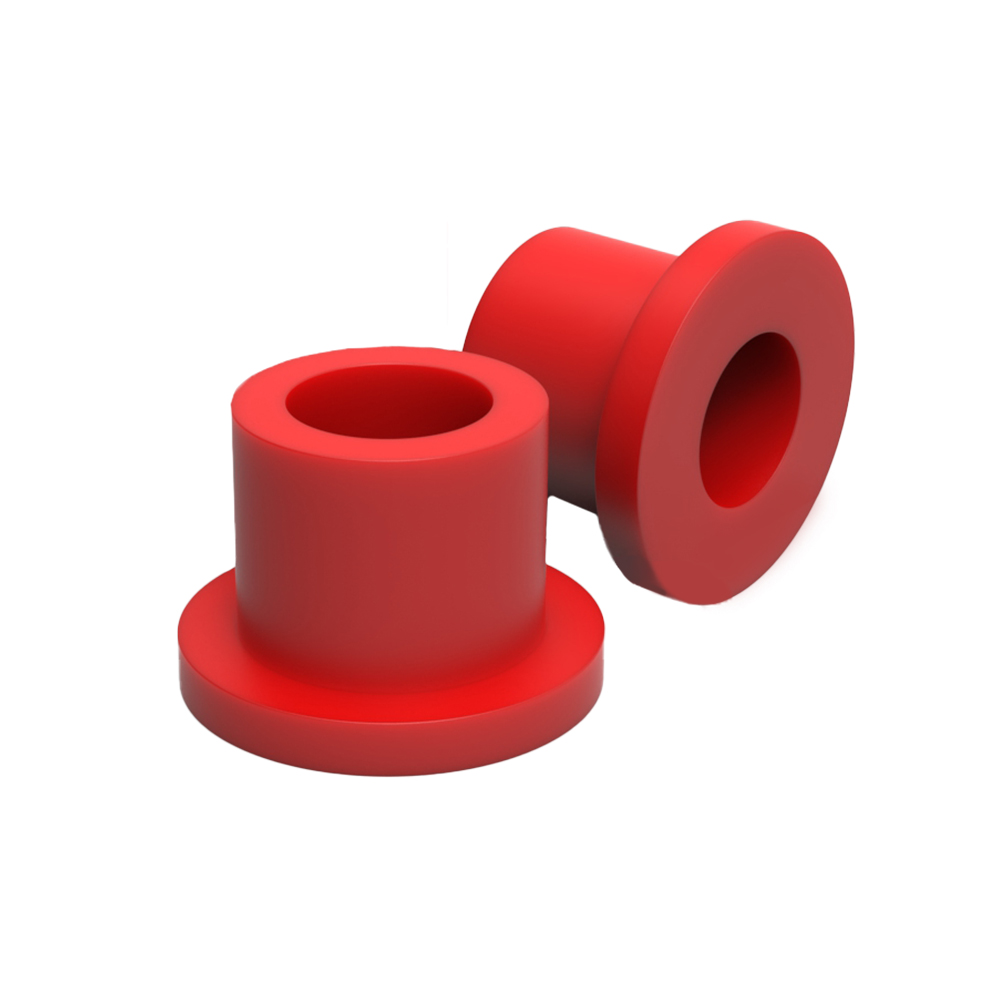
Certain applications require absolute geometric stability. Track-only race cars and high-precision industrial machinery cannot tolerate any component deflection. Solid metal mounts lock components perfectly in place. Suspension geometry remains absolutely static under massive cornering loads. This zero-deflection characteristic ensures maximum mechanical efficiency and perfectly predictable handling traits.
Metal excels in environments that exceed the melting point of elastomers. Exhaust hangers, turbocharger supports, and furnace mechanisms require materials that ignore extreme heat. Steel and aluminum maintain their structural integrity at temperatures that would instantly vaporize rubber or urethane. When heat is the primary environmental factor, solid metal becomes the only viable engineering choice.
Differentiating between zero-movement solid metal mounts and articulating spherical joints is important. Solid billet mounts bolt components together rigidly with no intended movement. Spherical bearings, or uniballs, allow rotational movement. They provide articulation while maintaining strict dimensional tolerances. Both eliminate deflection, but they serve entirely different mechanical purposes.
Spherical metal joints allow angular misalignment while maintaining zero radial play. The central ball rotates freely within its outer race. This allows suspension arms to cycle through their travel smoothly. However, they do not compress or deflect under load. They provide precise articulation without the spongy feeling associated with soft elastomers.
Solid metal transfers 100 percent of shock loads to surrounding brackets and mounting points. When a vehicle hits a pothole, the force bypasses the mount and strikes the chassis directly. This creates an incredibly harsh operating environment. Every vibration, gear whine, and impact resonates through the entire structure.
The risk of micro-fractures, metal fatigue, and structural failure in adjacent components increases dramatically. Factory chassis mounts are rarely designed to handle undamped shock loads. Upgrading to solid metal often requires extensive structural reinforcement. You must weld gussets and reinforcement plates to prevent the chassis from tearing itself apart over time.
Evaluating a urethane bushing vs metal requires looking at long-term wear characteristics. Metal-on-metal wear requires constant maintenance. Spherical joints rely on thin Teflon liners that degrade quickly. Polyurethane offers self-lubricating or grease-retaining properties. It features internal grooves that hold synthetic grease, providing long-lasting lubrication and reducing maintenance intervals significantly.
The impact of abrasive contaminants like sand, mud, and road salt destroys moving parts. Dirt acts like grinding paste inside a metal spherical joint. It accelerates wear and creates sloppy tolerances rapidly. A polyurethane bushing seals against the mounting hardware much better. It prevents abrasive ingress, ensuring a longer operational lifespan in dirty, off-road, or industrial environments.
| Feature | Polyurethane Bushing | Solid Metal / Spherical |
|---|---|---|
| Deflection Control | Tunable (Low to Medium) | Absolute Zero |
| Vibration Damping | Excellent | None |
| Maintenance Needs | Low (Initial Greasing) | High (Cleaning/Replacing) |
| Structural Impact | Protects surrounding metal | Accelerates metal fatigue |
| Harsh Environment Life | Very High | Low (Prone to grit wear) |
The practical reality of upgrading involves understanding installation tolerances. Press-fit tolerances for solid metal mounts are incredibly strict. A misaligned metal sleeve will bind instantly. The slight compliance of a polyurethane bushing forgives minor manufacturing variances in factory housings. This makes installation significantly easier and reduces the need for precision machining.
Reusing factory housings with custom inserts presents a logical upgrade path. You avoid replacing entire arms with CNC-machined billet aluminum parts. The aesthetic versus utility debate often pushes builders toward expensive billet arms. However, pressing high-quality urethane into existing steel arms provides identical functional benefits. It maximizes utility without unnecessary complexity.
Initial manufacturing and purchase costs of raw materials vary wildly. Machining complex billet aluminum arms and spherical joints requires expensive CNC time. Casting urethane is highly efficient and scalable. The initial acquisition cost for elastomer upgrades is substantially lower than full metal replacements.
Secondary maintenance involves replacement frequency and specialized tools. Spherical joints require frequent replacement as they wear out and clunk. Solid mounts cause collateral damage to surrounding structural components. Repairing a torn chassis mount requires expensive fabrication work. Urethane protects the chassis, drastically reducing long-term repair requirements.
Selecting the correct durometer is the most important step to avoid over-stiffening the assembly. A street-driven vehicle requires a softer Shore A rating. A dedicated track machine can utilize a harder Shore D rating. Matching the hardness to the specific use case prevents unbearable cabin resonance and harshness.
Designing proper crush tubes and sleeves prevents over-torquing. The central metal sleeve must bear the clamping force of the mounting bolt. If the sleeve is too short, the bolt crushes the urethane. This causes severe binding and restricts suspension articulation. Precision-machined crush sleeves ensure the pivot point moves freely.
Standard petroleum-based greases can degrade certain urethanes over time. They break down the chemical structure, causing the material to crumble. You must strictly avoid standard chassis grease when assembling these components. Using the wrong chemical ruins the upgrade immediately.
Best practices dictate using PTFE or silicone-based synthetic greases. These lubricants adhere aggressively to the urethane surface. They repel water and will not wash out easily. Applying a generous coat to all contact surfaces during initial assembly guarantees quiet, bind-free operation for years.
Ensuring suspension components are torqued at ride height prevents pre-loading the bushing. If you tighten control arm bolts while the vehicle is lifted, the suspension binds when lowered. The material twists unnaturally. This constant torsional stress tears the urethane prematurely. Always finalize torque specifications with the system resting at its natural operational angle.
A: Yes. Polyurethane offers superior ride quality and vibration damping compared to the extreme harshness of solid metal mounts. Metal transfers every bump and vibration directly into the cabin, making daily driving exhausting. Polyurethane absorbs these impacts while still providing significantly better handling than factory rubber.
A: Unlubricated metal galls and clunks loudly over time. Polyurethane can squeak if installed without the correct silicone or PTFE grease. Proper installation and generous lubrication mitigate noise issues entirely. Once properly greased, urethane operates quietly for extended periods.
A: Lifespan depends on load, environmental exposure, and durometer. Generally, it outlasts standard rubber by a factor of 3 to 5. It resists chemicals and UV degradation effectively. It also avoids the sudden, catastrophic galling failures associated with unmaintained metal joints.
A: Yes. Polyurethane can be cast into custom shapes and poured to specific hardness levels. This allows it to handle massive static loads in unique industrial applications. It provides excellent vibration isolation for heavy machinery while maintaining necessary structural alignment.
A: Metal is vastly superior for extreme heat applications. Polyurethane has specific thermal thresholds and will melt or degrade if placed too close to exhaust headers or industrial furnaces. If high ambient heat is unavoidable, solid metal is the required engineering solution.
A: Polyurethane inserts pressed into factory housings deliver identical performance benefits at a fraction of the cost. While billet mounts look impressive, they often provide no additional functional utility for standard applications. Reusing factory steel housings with upgraded inserts is the most efficient choice.
A: Uniballs offer zero deflection and precise articulation but wear out quickly due to dirt intrusion. They require frequent cleaning and replacement. Polyurethane offers excellent compliance, seals out abrasive dirt effectively, and requires significantly less maintenance in dirty or off-road environments.


