

Views: 0 Author: Site Editor Publish Time: 2026-08-12 Origin: Site


Selecting the wrong screen media carries a heavy operational cost. Unscheduled downtime, severe material pegging, and reduced throughput quickly erode site profitability in high-volume operations. Plant managers constantly face the engineering challenge of balancing maximum open area for high production rates against the structural integrity needed for long wear life in harsh, abrasive environments. Relying on basic dimensions is no longer sufficient when outfitting a modern vibrating deck.
Optimizing a vibrating screen requires evaluating specific material properties, aperture configurations, and fastening mechanisms unique to synthetic media. Understanding these variables ensures your screening deck operates at peak efficiency. You must match the physical properties of the media directly to the demands of your feed material. Moving beyond standard wire cloth means analyzing how synthetic compounds react to impact, moisture, and sliding abrasion.
Cut Point vs. Open Area: Selecting the correct aperture size determines the cut point, but the panel's internal reinforcement dictates the actual open area percentage and overall throughput.
Durometer Dictates Durability: Polyurethane hardness (durometer) must be matched to the specific feed material's abrasiveness, impact force, and ambient operating temperatures.
Aperture Geometry Prevents Blinding: Utilizing slotted or specialized aperture shapes is critical for fine material screens handling high-moisture or near-size particles.
Installation Compatibility: The choice between modular panels and tensioned mats depends heavily on existing deck infrastructure and the required frequency of change-outs.
OEM Drop-In Accuracy: Ensuring exact physical dimensions, hook configurations, and fastening alignment prevents catastrophic premature panel dislocation on OEM vibrating decks.
Establishing clear operational goals is the first step in specifying a mineral screening mesh. You must define the baseline expectations for your specific application before looking at manufacturer catalogs. Every quarry and processing plant has unique feed characteristics that dictate media selection.
Increasing the open area of a screen naturally reduces the volume of polyurethane present on the deck. Less material means a shorter overall wear life. Operators must decide whether maximizing immediate hourly tonnage is more critical than extending maintenance intervals. High-throughput applications often require thinner panel profiles, which sacrifice some longevity to achieve the necessary screening capacity.
When you push for maximum open area, the internal reinforcement structure becomes thinner. This reduces the load-bearing capacity of the panel. If you overload a high-open-area panel, it will sag and eventually fail under the dynamic forces of the vibrating screen. You have to calculate the bed depth of the material traveling over the deck and ensure the panel thickness can support that weight without deflecting.
Panel Profile | Open Area | Wear Life | Best Application |
|---|---|---|---|
Heavy-Duty Thick Profile | Low (25-35%) | Maximum | Primary scalping, high impact zones, large top size. |
Standard Profile | Medium (35-45%) | Balanced | Secondary sizing, moderate abrasion, standard aggregate. |
Thin Profile (High Open Area) | High (45-55%+) | Reduced | Tertiary screening, fine materials, maximum throughput needed. |
Auditing the feed material before ordering is non-negotiable. You must document the maximum top size, drop height, and moisture content. Abrasiveness plays a massive role; high silica content demands highly abrasion-resistant formulations. Heavy impact zones require thicker panels to absorb the kinetic energy of large rocks falling onto the deck.
If you drop eight-inch granite from a height of three feet directly onto a standard polyurethane panel, it will punch right through. You need to specify impact pads or blanked-out sections at the feed end to take that initial beating. The shape of the particle also matters. Flaky or elongated particles behave differently than cubical rocks, often requiring specific aperture geometries to prevent them from spearing into the mesh.
Ambient operating conditions drastically alter synthetic media performance. Freezing weather causes standard polyurethane to become brittle and prone to cracking under vibration. Conversely, high-heat environments or exposure to certain processing chemicals can degrade the structural integrity of the mesh. Selecting a climate-appropriate chemical formulation prevents premature failure.
In northern climates, a screen deck left idle overnight in sub-zero temperatures will freeze solid. When the plant starts up the next morning, the violent vibration can shatter standard durometer panels. You must specify cold-weather formulations that retain their elastomeric properties below freezing. Similarly, if you are washing material with recycled water containing residual chemicals or oils, you need a formulation resistant to chemical attack.
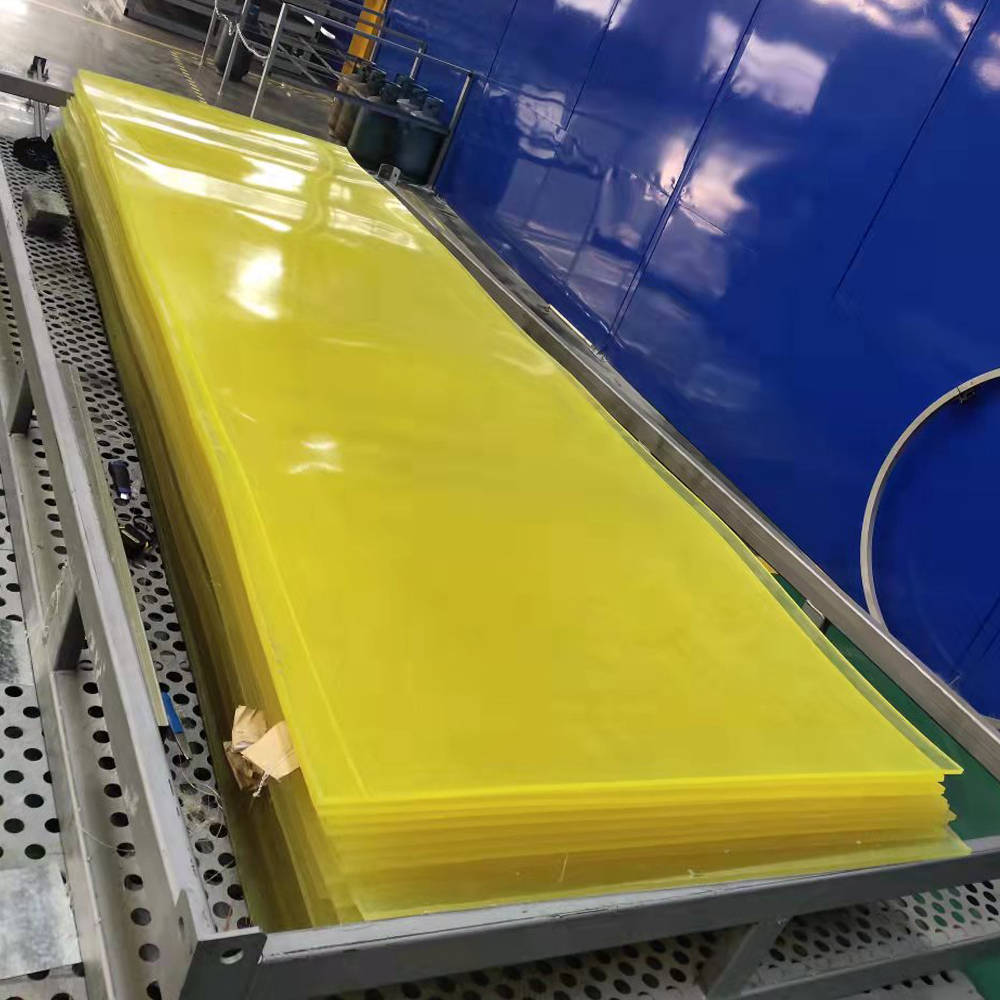
Defining the exact cut point required for your separation process drives the entire specification. Manufacturers calculate aperture dimensions with specific manufacturing tolerances to ensure precise sizing. When transitioning from wire cloth, you must translate target separation cut points into equivalent synthetic aperture sizes to avoid ordering errors.
Sizing conversion metrics are critical. A 10mm square opening in woven wire does not perform exactly like a 10mm square opening in polyurethane. The wire vibrates and flexes differently, often allowing slightly larger particles to pass. You generally need to specify a slightly larger aperture in synthetic media to achieve the same cut point as wire cloth. Always consult with the manufacturer to determine the exact conversion factor for your specific material.
Near-size particles frequently cause pegging. To combat this, manufacturers incorporate relief angles, creating tapered openings that widen downward. This geometry allows particles that enter the top of the aperture to pass through freely without lodging in the mesh. If a rock gets stuck halfway through a straight-walled aperture, it blocks that hole permanently, reducing your open area and throughput.
Open area is calculated by comparing the total area of the apertures to the total surface area of the panel. Panel thickness and internal steel or aramid reinforcement directly reduce the available open area. You must evaluate manufacturer claims regarding high open area designs against their actual load-bearing capacities.
The formula for calculating open area is straightforward: (Total Area of Openings / Total Area of Panel) x 100. However, you must account for the solid borders and the internal grid structure. A panel might have 50% open area in the perforated section, but when you factor in the solid edges required for fastening, the effective open area of the entire deck drops significantly.
Dynamic thin-profile designs offer a solution. These highly flexible screens are engineered specifically to match the high open-area performance of traditional woven wire while maintaining the wear benefits of synthetic materials. They use high-tensile internal reinforcement to maintain structural integrity despite the reduced polyurethane volume.
The Shore hardness scale measures the durometer of a polyurethane screen mesh, typically ranging from 60A to 90A. Softer formulations provide high flexibility, making them excellent for preventing blinding in sticky materials. Harder formulations deliver superior abrasion resistance, ideal for sliding wear applications.
Chemical formulation also matters. Polyether-based polyurethane resists water hydrolysis, making it suitable for wet screening. Polyester-based polyurethane offers better resistance to oil and certain chemical degradations, though it performs poorly in high-moisture environments. Choosing the wrong chemical base will lead to rapid degradation, regardless of the durometer rating.
Formulation Type | Primary Strength | Primary Weakness | Ideal Application |
|---|---|---|---|
Polyether Polyurethane | Excellent hydrolysis resistance (water). | Lower tensile strength than polyester. | Wet screening, wash plants, high moisture feed. |
Polyester Polyurethane | High tensile strength, oil/chemical resistance. | Poor hydrolysis resistance (breaks down in water). | Dry screening, oily environments, high sliding abrasion. |
Choosing the right hole shape dictates screening efficiency. You cannot just default to square openings for every application.
Square Openings: Standard use cases for accurate sizing and uniform material distribution. They provide the most precise cut point for cubical aggregate.
Slotted Openings: Used to increase open area and reduce blinding in high-moisture applications. Slots can run with or against the material flow. Running slots with the flow increases throughput; running them against the flow improves sizing accuracy.
Round Openings: Often deployed in heavy-impact zones or specific aggregate classifications where precise sizing of elongated particles is necessary. Round holes offer the most structural integrity because they lack stress-concentrating corners.
Modular systems, such as standard 1x1 foot or 1x2 foot panels, dominate modern screening decks. Fastening systems include pin-and-sleeve, snap-in, and grooved configurations. These mechanisms ensure installation speed and security under heavy vibration. Replacing only localized high-wear areas rather than the entire deck significantly reduces ongoing maintenance expenses.
The pin-and-sleeve system is highly reliable but requires a hammer and punch for removal, which takes time. Snap-in panels are faster to change but require precise deck frame tolerances to hold securely. Grooved systems slide onto specialized rails, offering a balance of security and ease of maintenance. You must inspect your deck stringers regularly; if the mounting holes or rails are worn, no modular panel will stay secured.
Tensioned mats serve as direct drop-in replacements for traditional wire cloth. Specifying tension hooks requires exact details regarding metal type, angle, and whether the deck uses side-tensioned or end-tensioned configurations. Proper tensioning prevents whipping and premature structural failure. However, tensioned synthetic media has lower maximum impact load limits compared to rigid modular systems.
When installing tensioned synthetic mats, you cannot over-tighten them like steel wire. Polyurethane stretches. If you apply too much tension, you will distort the apertures and ruin your cut point. You must follow the manufacturer's torque specifications and re-tension the mats after the first few hours of operation as the material settles into the camber bars.
Ensuring a perfect fit requires essential interface measurements for major vibrating screen brands like Metso, Sandvik, and Terex. Minor dimension discrepancies on deck support rails cause major installation failures. When retrofitting from wire cloth, you must verify the height and condition of crown and camber bars to ensure the synthetic panels seat correctly.
If your camber bars are worn flat, a tensioned synthetic mat will sag in the middle, causing material to channel down the center of the deck. This leads to rapid, localized wear and poor screening efficiency. Always replace worn rubber channel bucker strips before installing new synthetic media to ensure a tight, vibration-dampening fit.
A mining separation screen made of polyurethane typically offers 3 to 8 times the wear life of steel wire. While steel screens provide exceptionally high open area due to thin wire profiles, they wear out rapidly in abrasive conditions. Polyurethane also provides significant noise reduction benefits, which is crucial for enclosed or heavily regulated processing plants.
The upfront investment for synthetic media is higher, but the extended wear life and reduced maintenance downtime offset the initial expenditure. You spend less time locked out inside the screen changing broken wire panels. Furthermore, the smooth surface of polyurethane reduces friction, allowing material to stratify faster and travel more efficiently across the deck.
Feature | Polyurethane Screen | Woven Wire Mesh |
|---|---|---|
Wear Life | Excellent (3-8x longer) | Low to Moderate |
Open Area | Moderate | Very High |
Noise Reduction | High | Low |
Maintenance Frequency | Low | High |
Rubber generally outperforms polyurethane in primary scalping applications involving massive top sizes and high drop heights due to its superior impact resistance. Rubber absorbs kinetic energy better than any other media. However, polyurethane is vastly superior for wet applications and sliding abrasion, which are typical conditions found in secondary and tertiary sizing circuits.
If you put polyurethane on a primary scalper taking run-of-mine rock, it will likely fail from impact damage before it wears out from abrasion. Conversely, if you put rubber on a wet sizing screen, it will wear out quickly from the sliding friction of the slurry. You must match the material to the specific zone within your processing plant.
Screening fines with high clay or moisture content carries a severe risk of blinding. To mitigate this in a fine material screen, specify highly flexible, low-durometer polyurethane. Dynamic zig-zag aperture designs or the integration of secondary vibration mechanisms also help keep the deck clear.
Blinding occurs when sticky material coats the wires or synthetic bridges, eventually closing off the aperture entirely. A low-durometer panel flexes more violently under vibration, actively shedding the sticky buildup. You can also utilize ball trays beneath the screen deck; the bouncing rubber balls strike the underside of the mesh, knocking loose any pegged or blinded material.
Sub-zero temperatures cause polyurethane embrittlement, while high-heat applications lead to melting or deformation. Require manufacturers to provide temperature-specific formulations. Always verify the operating temperature limits listed in the technical data sheet before installation.
If you operate a dryer or asphalt plant, standard polyurethane will melt. You must specify high-temperature formulations or switch to wire cloth for those specific high-heat zones. For cold weather, ensure your storage facility is heated; installing frozen, stiff polyurethane panels is nearly impossible and often results in damaged fastening mechanisms.
Inconsistent aperture sizing or poor internal reinforcement bonding leads to catastrophic panel failure. Establish strict vendor evaluation criteria. Request ISO certifications, batch testing reports, and verifiable case studies from similar mineral processing environments to ensure reliability.
If the internal steel reinforcement is not properly bonded to the polyurethane during the casting process, the panel will delaminate under vibration. The polyurethane will strip away from the steel skeleton, destroying the panel in hours. Always inspect new panels for uniform casting, clean aperture edges, and proper dimensional tolerances before installing them on your deck.
Audit your feed material to determine exact abrasiveness, moisture content, and impact loads before selecting a durometer.
Request sample panels for pilot testing in high-wear zones to verify performance before committing to a full deck conversion.
Measure exact OEM deck dimensions, including stringer spacing and camber bar height, to ensure proper fastening and tensioning.
Select aperture geometry based on particle shape and moisture content to prevent blinding and pegging.
A: Open area is calculated by dividing the total area of the apertures by the total surface area of the screen panel, then multiplying by 100. You must account for the solid polyurethane borders and internal reinforcement structures, which reduce the available screening surface.
A: Polyether polyurethane resists water hydrolysis, making it ideal for wet screening applications. Polyester polyurethane offers higher tensile strength and better resistance to oils and certain chemicals, but it degrades faster when exposed to high moisture environments.
A: Yes, tensioned polyurethane mats are designed as direct drop-in replacements for woven wire. However, you must verify the hook type, tensioning mechanism, and ensure the deck's camber bars provide adequate support to prevent the heavier synthetic mat from sagging.
A: For highly abrasive, sliding-wear applications, a harder durometer rating between 85A and 90A is typically recommended. This hardness resists cutting and gouging from sharp rocks. Softer ratings are better suited for sticky materials where flexibility is needed to prevent blinding.
A: Tapered apertures feature relief angles where the opening is narrower at the top and wider at the bottom. If a near-size particle passes the top edge, the expanding geometry allows it to fall completely through, preventing it from wedging inside the mesh.
A: Polyurethane screen media typically lasts 3 to 8 times longer than standard woven steel wire mesh, depending on the application. This extended wear life significantly reduces maintenance downtime and replacement frequency in highly abrasive mineral processing environments.


