

Views: 0 Author: Site Editor Publish Time: 2026-07-30 Origin: Site


Unmitigated vibration, micro-shifting, and environmental exposure act as primary catalysts for premature heavy equipment failure, structural fatigue, and hazardous workplace slip accidents. When massive machinery operates continuously, the kinetic energy generated transfers directly into the floor and back into the machine base. Without proper isolation, this energy accelerates mechanical wear and creates dangerous conditions for floor personnel.
Traditional substrate protection and mounting materials often degrade, deform, or delaminate under high dynamic loads, chemical exposure, and extreme temperatures. Standard rubber pads, metal grating, or epoxy coatings fail to provide long-term stability. Facilities require a robust solution that withstands harsh conditions while providing structural stability and vibration dampening.
Transitioning from basic friction materials to engineered elastomeric solutions addresses mechanical isolation, surface stability, and operational safety simultaneously. This guide evaluates how implementing an anti skid polyurethane sheet mitigates mechanical wear, stabilizes operational footprints, and extends asset lifecycles across demanding industrial environments.
Vibration Isolation: Polyurethane’s high energy absorption capacity significantly reduces structural vibration transmission, preventing fastener loosening and component fatigue in heavy machinery.
Dynamic Load Resilience: Unlike standard rubber, urethane maintains its structural integrity and memory under extreme static and dynamic loads without cracking, tearing, or permanent deformation.
Chemical and Environmental Resistance: Polyurethane formulations resist degradation from petrochemicals, solvents, UV exposure, and moisture, making them critical for harsh industrial and oilfield applications.
Dual-Benefit ROI (Reliability & Safety): Implementing high-traction industrial sheets minimizes machine drift while dramatically lowering the risk of slip-and-fall incidents for operators in high-traffic work zones.
Continuous operation causes unsecured or poorly mounted equipment to drift across the facility floor. This phenomenon, known as machine walking, leads to severe misalignment. When machines shift, rigid connections like pipes and conduits experience extreme strain. This movement eventually leads to catastrophic mechanical failure, ruptured lines, and compromised production schedules. Operators must constantly monitor equipment position, wasting valuable maintenance hours on realignment tasks.
To combat machine walking, facilities often resort to bolting equipment directly to the concrete. However, rigid mounting transfers all kinetic energy into the foundation. The concrete eventually cracks, and the anchor bolts pull loose. A flexible yet high-friction interface is necessary to absorb the energy while keeping the machine firmly in place.
Unabsorbed kinetic energy wreaks havoc on internal machine components. Over time, constant vibration degrades bearings, damages motors, and weakens structural welds. The equipment essentially shakes itself apart. Maintenance teams find themselves replacing the same components repeatedly because the root cause—poor vibration isolation—remains unaddressed.
Different machines generate specific vibration frequencies. A stamping press creates low-frequency, high-amplitude shockwaves. A high-speed CNC lathe generates high-frequency, low-amplitude vibrations. The mounting material must possess the correct dampening properties to neutralize these specific frequencies before they cause structural fatigue.
Heavy impact loads and metal-on-concrete friction destroy facility floors. Concrete spalling and floor degradation occur rapidly when heavy machinery lacks proper mounting pads. Repairing these foundational issues disrupts operations and requires significant capital investment. Pouring new concrete pads or applying heavy-duty epoxy patches takes days to cure, halting production lines.
Protecting the substrate is just as important as protecting the machine. A proper isolation pad distributes the machine's weight over a larger surface area. This distribution prevents point-loading, which is the primary cause of concrete cracking under heavy industrial equipment.
Industrial environments frequently expose floors to cutting fluids, hydraulic oils, and moisture. These contaminants accelerate the breakdown of standard mounting pads. Furthermore, they create dangerous walk zones for personnel. The likelihood of severe slip-and-fall injuries increases exponentially in these conditions.
Standard rubber absorbs oils and swells, losing its structural integrity. Once compromised, the rubber acts like a sponge, holding the slippery fluids right at the base of the machine. Workers stepping near the equipment face immediate slip hazards. A non-porous, chemically resistant material is required to maintain a safe working environment.
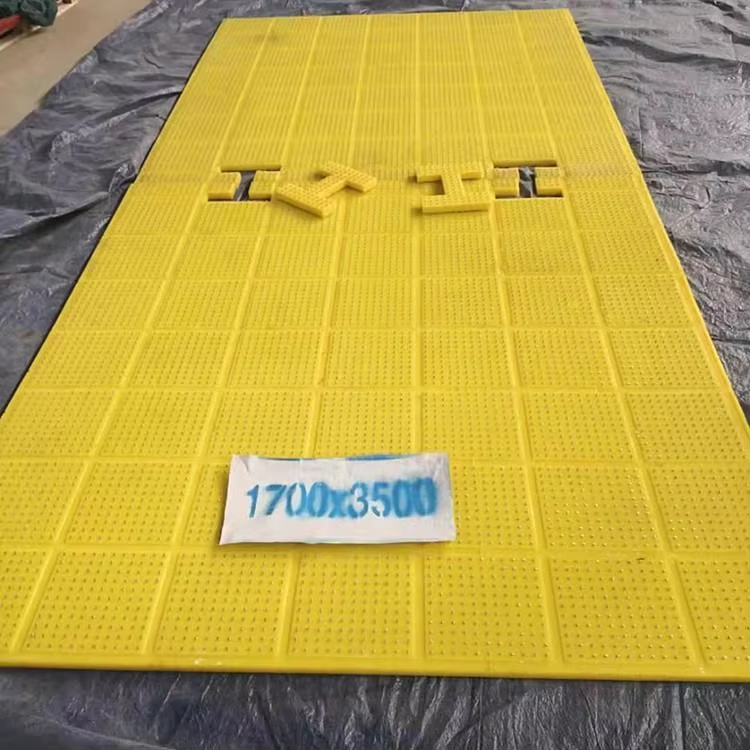
Rubber exhibits a high compression set, meaning it tends to permanently deform under sustained loads. Once rubber flattens, it loses its vibration-dampening properties. Polyurethane possesses high memory and rebound characteristics. It returns to its original shape even after prolonged heavy loading. This memory ensures consistent vibration isolation over the life of the machine.
Polyurethane also offers superior resistance to cutting, tearing, and high-load friction. In abrasive industrial environments where sharp metal debris and heavy traffic are common, rubber tears quickly. Polyurethane maintains its structural integrity, resisting the gouging and tearing that destroys lesser materials.
Material Property | Standard Rubber | Polyurethane |
|---|---|---|
Compression Set | High (Deforms permanently) | Low (High memory/rebound) |
Abrasion Resistance | Poor to Moderate | Excellent |
Chemical Resistance | Degrades in oils/solvents | Highly resistant to petrochemicals |
Load Bearing Capacity | Low to Medium | Extremely High |
Roll-on or spray-applied coatings fail and peel under heavy point loads, structural flexing, or high shear forces. Polyurea or epoxy with grit additives provide surface friction but offer zero vibration dampening. They lack the thickness required to absorb shock. When the concrete flexes under a heavy load, the rigid epoxy cracks and delaminates.
Paint additives necessitate frequent stripping and reapplication. This maintenance cycle disrupts production and consumes labor hours. A solid elastomeric barrier, such as an industrial anti slip pad, provides a set-and-forget solution. It delivers both high surface friction and deep impact absorption without the constant need for reapplication.
Metal solutions rust, wear down, and amplify operational noise. Steel grating provides traction but transfers all vibration directly into the surrounding structure. In wet environments, metal grating becomes a severe slip hazard unless constantly maintained with anti-slip tape or coatings.
Polyurethane dampens sound, absorbs impact energy, and is completely rust-proof. It provides a quieter, safer, and more comfortable walking surface for operators. The material inherently resists the corrosion that plagues metal grating in chemical or outdoor environments.
Matching the Shore hardness to the specific weight and dynamic force of the equipment is necessary. Durometer selection ranges from Shore 60A for lighter, high-vibration equipment to 95A for massive static loads. Selecting the correct hardness ensures optimal performance. A pad that is too soft will cause the machine to lean, while a pad that is too hard will fail to absorb vibration.
Energy dissipation determines how well the material absorbs shock from stamping presses, CNC machines, and heavy material handling equipment. Effective isolation prevents kinetic energy from transferring back into the machine base. This protection extends the life of delicate internal components and maintains machining tolerances.
Calculate the total static weight of the machinery.
Determine the dynamic load factors during peak operation.
Identify the primary vibration frequencies generated.
Select a durometer that balances load support with energy absorption.
Evaluating material performance in petrochemical environments is essential for heavy industry. Polyurethane excels when exposed to crude oil, drilling muds, lubricants, and hydraulic fluids. Other elastomers rapidly degrade, swell, or dissolve in these harsh chemicals.
Assessing how extreme heat and sub-zero temperatures impact elastomeric flexibility ensures year-round reliability. Polyurethane formulations can be adjusted to maintain performance across wide temperature ranges. This adaptability is critical for outdoor installations or unheated facilities.
The necessity of using a specialized oilfield rig floor mat becomes clear in drilling applications. These mats prevent equipment slippage, protect rig substructures, and maintain traction during high-exposure drilling operations. They withstand the constant barrage of drilling fluids and heavy pipe impacts.
How the backing of the sheet interacts with different industrial surfaces determines its effectiveness. Whether applied to polished concrete, steel plating, diamond deck, or wood, the sheet must maintain a secure bond. A high coefficient of friction prevents shifting between the pad and the floor.
Evaluating molded textures versus embedded grit helps maximize CoF in wet, oily, or mud-slicked conditions. Diamond plate, raised studs, or ribbed patterns offer different advantages depending on the specific environmental contaminants present. Deep drainage channels help channel fluids away from the walking surface.
Ensuring the sheet provides equal dual-sided grip prevents movement between the sheet and the floor, as well as the sheet and the equipment base. Interface stability is critical for overall mechanical isolation. If the machine slides off the pad, or the pad slides across the floor, the isolation system has failed.
Maintaining tight tolerances in CNC machining requires isolating external floor vibrations. A forklift driving past a precision lathe can ruin a machined part if the vibrations transfer through the floor. Utilizing a high-durometer non slip polyurethane mat under leveling mounts prevents drift and absorbs high-frequency vibrations.
This configuration ensures precision manufacturing and reduces scrap rates. The mats provide a stable foundation that resists the cutting fluids and tramp oils common in machining centers. Operators can work confidently knowing the machine remains securely positioned.
Preventing heavy pump and generator shifting on drilling platforms secures high-traffic worker zones. The constant vibration of mud pumps and generators causes severe structural fatigue on steel decks. Deploying heavy, chemically resistant polyurethane sheets with deep drainage channels withstands extreme temperature fluctuations and constant mud exposure.
These specialized mats protect the steel decking from impact damage when heavy pipes or tools are dropped. They also provide a high-traction surface for roughnecks working in wet, oily conditions. The durability of polyurethane ensures these mats survive multiple drilling campaigns.
Reducing wear on conveyor supports and robotic arm bases protects floor substrates from heavy forklift and automated guided vehicle traffic. Constant movement and vibration loosen floor anchors over time. Custom-cut industrial pads integrate directly into equipment mounting plates and transition zones.
These pads absorb the shock of heavy pallets being dropped onto conveyors. They also isolate the high-speed movements of robotic arms, preventing the base from tearing out of the concrete. The result is a more stable, reliable automated system with reduced maintenance requirements.
Selecting a sheet that is too soft causes equipment instability and lean, while one that is too hard fails to absorb vibration and slip. Conduct a thorough static and dynamic load analysis. Consult with the manufacturer to specify the correct Shore hardness based on weight distribution and operational frequencies.
Sheet shifting due to oil-soaked, uneven, or dirty surfaces beneath the pad compromises safety. Mandate rigorous degreasing and concrete profiling before installation. Use compatible industrial adhesives, mechanical anchors, or interlocking tiles where necessary to ensure the pad remains fixed in place.
Warping, buckling, or bubbling of the sheet occurs in environments with extreme seasonal or operational temperature swings. Engineer precise expansion gaps into the installation design. Utilize mechanically fastened segmented mats rather than a single continuous sheet to allow for thermal expansion and contraction without compromising the surface integrity.
An anti skid polyurethane sheet functions as a critical structural component for mechanical isolation, vibration dampening, and asset protection. Prioritize polyurethane solutions when equipment is subjected to high dynamic loads, harsh chemical exposure, and where traditional materials have historically failed. Proper implementation stabilizes machinery, protects facility foundations, and ensures operator safety.
Audit current equipment mounting failures to identify high-risk zones within the facility.
Calculate the static and dynamic loads of the machinery requiring isolation.
Evaluate the surface types and environmental contaminants present in the installation area.
Request material samples and technical data sheets from specialized urethane manufacturers to verify chemical compatibility.
A: The ideal durometer typically ranges from 70A to 95A, depending on the machine's weight and the frequency of vibration. Softer urethanes offer better vibration dampening for lighter equipment, while harder urethanes provide maximum stability and prevent creep under heavy, high-impact machinery.
A: Polyurethane offers significantly higher load-bearing capacity, superior abrasion resistance, and better long-term resistance to oils and solvents. Neoprene or nitrile rubber tend to dry out, crack, and permanently compress under heavy industrial loads, losing their effectiveness rapidly.
A: Yes, polyurethane can be custom-cast to match precise equipment footprints. Manufacturers can incorporate specific mounting hole patterns, drainage channels, and varied surface textures to optimize performance for unique industrial applications and specific machinery layouts.
A: Extreme heat can soften standard polyurethane, and sub-zero temperatures can increase rigidity. However, manufacturers formulate specific urethane blends designed to maintain flexibility, load-bearing capacity, and surface grip across extreme temperature ranges for outdoor or specialized applications.
A: Proper installation requires a clean, dry, and degreased surface. Depending on the application, mechanical fastening, specialized adhesives, or concrete profiling may be necessary to ensure the mat remains securely anchored under heavy dynamic loads and high-shear forces.


