

Views: 0 Author: Site Editor Publish Time: 2026-09-10 Origin: Site


Component failure in heavy-duty applications carries massive operational risks. Premature degradation of seals, gaskets, or mounts usually stems from poorly defined initial specifications rather than manufacturing defects. When a component operates under high pressure, extreme temperatures, or aggressive chemical exposure, assumptions lead directly to system failure.
There is a dangerous gap between engineering intent and manufacturing reality. Simply requesting durable materials is insufficient for modern industrial applications. Original equipment manufacturers and buyers must translate operational demands into precise, measurable material and dimensional specifications. Failing to define these parameters guarantees misaligned production, resulting in parts that tear, swell, or lose their sealing capabilities under stress.
This guide serves as a technical framework for defining the exact specifications required when ordering custom rubber products. It ensures alignment with manufacturing capabilities, compliance standards, and long-term performance goals. By replacing vague requests with standardized metrics, you secure components that perform exactly as intended.
Material Selection is Application-Specific: Base polymer choice (e.g., EPDM vs. FKM) must be dictated by exact chemical, thermal, and environmental exposure rather than baseline cost.
Tolerances Dictate Tooling: Adhering to Rubber Manufacturers Association (RMA) tolerance standards is critical; over-specifying tolerances exponentially increases tooling costs without guaranteed performance gains.
Dynamic vs. Static Requirements: Specifications must explicitly state whether the component will undergo dynamic stress (requiring high abrasion resistance and low compression set) or static sealing.
Validation Over Assumptions: Require manufacturers to provide ASTM D2000 line call-outs and material test reports to verify that the final compound matches the engineering specifications.
Defining success criteria upfront is the only way to evaluate a manufacturing run. A successful order achieves zero defect rates, exact fitment within the assembly, and a predictable lifecycle under field conditions. Achieving these criteria requires eliminating ambiguity from the initial design phase. When specifications lack detail, manufacturers default to standard assumptions, which rarely align with specialized industrial requirements.
The concept of off-the-shelf, standard industrial rubber is a myth. Generic specifications inevitably lead to the use of commercial-grade compounds. These baseline materials might look correct upon delivery, but they fail rapidly under industrial stress. A commercial-grade nitrile might handle occasional oil splashes but will swell and degrade if continuously submerged in aggressive hydraulic fluids. Relying on generic material call-outs removes your control over the final product's chemical makeup.
Specification errors trigger cascading financial impacts across the production timeline. Omitting variables like shrinkage rates or thermal expansion coefficients results in parts that simply do not fit the mating hardware. This necessitates expensive mold rework and delays production schedules. Worse, if these out-of-spec parts reach the field, catastrophic failures occur. A seal that loses its elasticity at sub-zero temperatures will leak, potentially destroying surrounding equipment and halting operations entirely.
Common failure modes caused by vague specifications include:
Extrusion and Nibbling: Occurs when the specified durometer is too soft for the system pressure, causing the rubber to push into clearance gaps.
Compression Set Failure: Happens when a material cannot recover its shape after being compressed, leading to immediate fluid bypass.
Chemical Swell: Results from incompatible base polymers absorbing system fluids, expanding beyond their designed dimensional tolerances.
Thermal Embrittlement: Caused by selecting a compound that cannot withstand the lower limits of the application's temperature range, causing the part to shatter under impact.
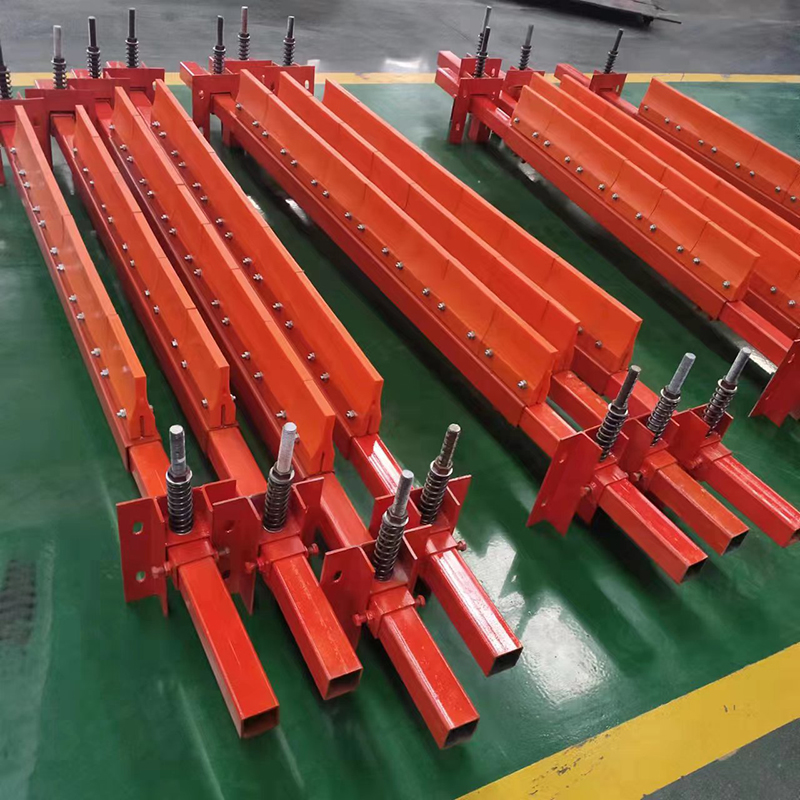
Selecting the correct base elastomer is the foundation of any rubber specification. No single material is universally superior; every choice involves trade-offs between workability, environmental resistance, and mechanical strength. Engineers must match the polymer family directly to the primary stress factor of the application.
Elastomer Family | Primary Strength | Key Weakness | Common Applications |
|---|---|---|---|
Nitrile (NBR) | Excellent petroleum and oil resistance | Poor ozone and UV resistance | Fuel hoses, oil seals, O-rings |
Silicone (VMQ) | Extreme temperature range flexibility | Low tensile strength and tear resistance | Medical devices, high-heat gaskets |
EPDM | Superior UV, ozone, and weathering resistance | Incompatible with petroleum-based oils | Outdoor enclosures, roofing membranes |
FKM (Viton™) | Exceptional harsh chemical and heat resistance | Difficult to process at low temperatures | Aerospace seals, chemical processing |
Neoprene (CR) | Good all-around balance of weather and oil resistance | Moderate performance in extreme temperatures | HVAC seals, mass transit window gaskets |
Natural Rubber (NR) | Outstanding tear strength and abrasion resistance | Degrades quickly in oils and solvents | Vibration mounts, heavy-duty tires |
Durometer measures the hardness of a rubber compound, typically evaluated on the Shore A scale for industrial applications. This scale ranges from 0 to 100, though practical industrial components generally fall between 30 (very soft, like a rubber band) and 90 (very hard, like a skateboard wheel). Specifying durometer dictates the balance between flexibility and structural integrity. Standard test methods, such as ASTM D2240, ensure consistent hardness measurements across different production batches.
A standard tolerance of ±5 points is customary, as exact pinpoint hardness is structurally impossible to guarantee across a vulcanized batch. For example, a 70 Shore A compound is the industry standard for most O-rings, providing enough rigidity to resist extrusion while remaining soft enough to conform to mating metal surfaces. If the application involves high pressure, engineers might specify a 90 Shore A compound to prevent the seal from deforming into clearance gaps.
Tensile strength specifications determine the material's resistance to breaking under tension. Measured via ASTM D412, this metric is vital for preventing tearing in high-stress applications. If a component must endure stretching during installation or operation, a high tensile strength requirement prevents catastrophic rupture. Engineers must specify the minimum acceptable megapascals (MPa) or pounds per square inch (psi) required to maintain structural integrity under maximum load.
Compression set evaluates a material's failure to return to its original thickness after prolonged compression. Defined by ASTM D395, this metric is arguably the most essential specification for seals and gaskets. A low compression set percentage is mandatory to prevent leaks over time. If a rubber gasket takes a high compression set, it permanently flattens. Once the mating surfaces shift or thermal contraction occurs, the flattened gasket can no longer fill the gap, resulting in immediate fluid or gas bypass.
Elongation at break measures how far a material can stretch before failing, expressed as a percentage of its original length. Components that must stretch over metal housings during installation require specific elongation minimums. Specifying this metric ensures the rubber maintains its internal structure during extreme deformation, preventing micro-tears that would otherwise propagate into full component failure during active operation.
Thermal specifications must reflect actual field conditions, not just ambient room temperature. Buyers must specify both continuous operating temperatures and intermittent peak temperatures. A compound might survive a continuous 200°F environment but fail rapidly if subjected to daily 300°F spikes. Thermal cycling—the rapid transition between hot and cold—stresses the polymer chains heavily.
Thermal degradation takes two primary forms. In extreme cold, elastomers undergo embrittlement, losing their flexibility and shattering under impact. In extreme heat, the material may melt, revert to a gummy state, or permanently lose its tensile strength. Specifying the exact thermal envelope allows the manufacturer to select appropriate curing agents and plasticizers to stabilize the compound. For instance, standard silicone performs well at 400°F, but specialized high-temperature silicone formulations are required to survive continuous exposure at 500°F.
Rubber compounds react violently to incompatible chemicals. Specifications must list all potential chemical exposures, including primary fluids, secondary lubricants, cleaning agents, and environmental fuels. A seal designed for water resistance might dissolve completely if exposed to a routine industrial degreaser.
Volume swell is the primary metric for chemical incompatibility. When rubber absorbs a fluid, it swells, softening the material and altering its dimensional tolerances. A swollen O-ring will extrude from its groove and shear off during dynamic movement. Engineers must specify acceptable volume swell limits—often aiming for less than 10% swell over a 70-hour exposure test—to ensure the component retains its mechanical properties. Testing protocols like ASTM D471 provide standardized methods for evaluating fluid resistance across different elastomer batches.
Outdoor applications introduce a distinct set of environmental hazards. Ozone cracking is a severe risk for materials under tension. Ozone attacks the double bonds in certain polymer chains, causing deep, visible cracks that compromise the part's structural integrity. UV radiation accelerates this degradation, causing the rubber to chalk, harden, and eventually crumble.
Specifications for outdoor components must explicitly demand ozone and UV resistance. This often requires shifting the base polymer to EPDM or adding specific anti-ozonant waxes to the compound formulation. Identifying outdoor exposure upfront prevents the rapid deterioration of parts that otherwise meet all mechanical requirements. ASTM D1149 outlines the standard test methods for rubber deterioration in ozone environments, providing a measurable baseline for your specifications.
Rubber does not behave like metal. Its inherent elasticity and thermal expansion properties make metal-like machining tolerances impossible to achieve without exorbitant costs. The Rubber Manufacturers Association (RMA) provides standardized classifications for custom molded rubber parts, ranging from A1 (High Precision) to A4 (Commercial).
RMA Class | Description | Typical Application | Cost Impact |
|---|---|---|---|
A1 | High Precision | Aerospace seals, medical devices | Highest (Requires specialized tooling and cryogenic deflashing) |
A2 | Precision | Automotive components, tight-fitting gaskets | High (Requires strict mold maintenance and process control) |
A3 | Commercial | Standard industrial mounts, general sealing | Moderate (Industry standard for most applications) |
A4 | Basic | Bumpers, non-critical covers | Lowest (Allows for wider dimensional variation) |
Specifying an A1 tolerance requires highly engineered molds, specialized shrinkage calculations, and often secondary cryogenic deflashing operations. For most industrial applications, an A3 (Commercial) tolerance provides the necessary fitment while maintaining a reasonable cost-to-benefit ratio. Over-specifying tolerances exponentially increases tooling and piece-part costs without delivering tangible performance gains in the final assembly.
All rubber compounds shrink after the curing process as they cool to room temperature. However, different formulations shrink at vastly different rates. A silicone part will shrink significantly more than a natural rubber part molded in the exact same cavity. Therefore, mold dimensions must be cut larger than the final specified part dimensions.
The manufacturer must be heavily involved in mold design to calculate exact shrinkage allowances based on the specified compound. If a buyer attempts to use an existing mold designed for NBR to produce a new FKM part, the resulting components will be dimensionally inaccurate. Shrinkage calculations dictate the fundamental geometry of the tooling. Engineers must finalize the material selection before any steel is cut for the mold.
Collaborating with the manufacturer on part geometry ensures cost-effectiveness and optimal manufacturability. Design for Manufacturability (DFM) focuses on adjusting the component's shape to flow better within the mold and release easily after curing.
Radii: Eliminating sharp internal corners prevents stress concentrations and tearing during demolding.
Undercuts: Minimizing deep undercuts reduces the need for complex, multi-plate molds, lowering tooling expenses.
Draft Angles: Incorporating slight tapers on vertical walls allows the part to eject smoothly without distortion.
Wall Thickness: Maintaining uniform wall thickness prevents uneven curing, which can lead to internal voids or surface sink marks.
Overmolding or bonding rubber to a metal substrate introduces a complex set of chemical and mechanical requirements. The specifications must define the exact substrate material, including any plating or coatings. Surface preparation standards, such as grit blasting or chemical etching, must be explicitly stated to ensure the adhesive primer functions correctly.
Adhesive selection depends entirely on the chosen elastomer and the expected environmental exposure. Finally, the specification must outline pull-test requirements to verify the bond strength. The goal is to achieve rubber-tearing bonds, where the rubber material fails before the adhesive layer separates from the metal substrate. ASTM D429 provides the standard test methods for evaluating rubber-to-metal adhesion.
Components subject to continuous friction, such as chutes, rollers, and bumpers, require explicit abrasion resistance specifications. Abrasion occurs through sliding friction or direct impingement. Specifying the correct polymer, often polyurethane or natural rubber, is critical for wear resistant rubber products.
Testing methods like the DIN abrasion test (ASTM D5963) measure the volume loss of a rubber sample when rubbed against an abrasive sheet. Specifying a maximum allowable volume loss ensures the material will survive in harsh environments like mining conveyors or aggregate sorting facilities.
Friction coefficients play a major role in dynamic applications. A high friction coefficient is necessary for drive rollers gripping a belt, while a low friction coefficient is required for a sliding pneumatic seal. Surface finishes applied to the mold directly impact these friction levels. Specifications should dictate whether a matte, textured, or highly polished finish is required to achieve the desired operational friction.
The operational state of the component dictates its physical requirements. A static O-ring sits stationary between two metal flanges, requiring excellent compression set resistance and chemical compatibility. It does not move, so abrasion resistance is irrelevant.
Conversely, a dynamic diaphragm or vibration isolator flexes millions of times throughout its lifecycle. These components require high flex fatigue resistance to prevent cracking under continuous motion. Specifications must clearly define the stroke length, frequency of movement, and expected cycle life to ensure the compound can withstand dynamic mechanical stress. The De Mattia flex test (ASTM D430) is commonly used to evaluate a compound's resistance to cracking under repeated flexing.
Regulatory compliance must be specified upfront to ensure critical-to-function performance and reliability. Retroactively applying certifications to an existing production run is often impossible. The operating environment dictates the required regulatory framework.
FDA Compliance: Mandatory for food processing and beverage equipment, requiring non-toxic, non-leaching ingredients.
AS9100D: Required for aerospace applications, demanding rigorous traceability and quality management systems.
MIL-SPEC: Military specifications dictate exact compound formulations and testing protocols for defense hardware.
USP Class VI: The highest standard for medical devices, requiring extensive biocompatibility testing.
NSF 61: Required for components in contact with potable drinking water systems.
The ASTM D2000 classification system is the industry standard for specifying vulcanized rubber materials. Instead of writing paragraphs describing the desired material, engineers use a standardized alphanumeric line call-out. For example, a call-out like "2BG715 B14 EA14 EF11" dictates the base polymer, required durometer, tensile strength, and specific testing parameters for heat resistance and compression set.
Buyers must require strict validation protocols. Requesting a First Article Inspection (FAI) ensures the initial production parts meet all dimensional and material specifications before mass production begins. The FAI report should include full dimensional layouts and material test results. Ongoing batch testing reports verify that the manufacturer maintains strict compounding controls, ensuring the trustworthiness of the supply chain over time.
Selecting a manufacturing partner goes beyond evaluating machine capacity. The true value lies in engineering support. A capable manufacturer acts as a collaborative partner, guiding buyers through complex material selections and DFM adjustments. Avoid vendors that operate strictly as build-to-print shops without offering compounding expertise. Industrial rubber components require a nuanced understanding of polymer chemistry that most general procurement teams lack.
Evaluating tooling quotes requires understanding the relationship between upfront costs and piece-price scalability. A single-cavity prototype mold is inexpensive and allows for rapid physical testing of the compound. However, it yields a high individual piece price.
Multi-cavity production molds require a larger initial capital investment but drastically reduce the cost per part during high-volume runs. Upfront tooling investments dictate long-term scalability. Buyers must evaluate quotes based on the total projected volume over the product's lifecycle, not just the initial prototype run. Furthermore, the molding method—compression, transfer, or injection—heavily influences both tooling cost and production speed. Injection molding requires expensive tooling but offers the fastest cycle times for high-volume orders.
A vendor's ability to scale production is critical. A manufacturer might successfully produce 100 prototype parts using compression molding but struggle to deliver 100,000 parts if they lack automated injection molding capabilities. Evaluate the manufacturer's equipment roster and raw material supply chain. They must demonstrate the ability to transition from low-volume prototyping to high-volume production without altering the specified compound or compromising quality.
During vendor evaluation, specific warning signs indicate a high risk of future failures. An unwillingness to share detailed material data sheets suggests the vendor is using generic, unverified compounds. A lack of in-house compounding expertise means they rely entirely on third-party mixers, reducing their control over material consistency. Finally, vague commitments to dimensional tolerances indicate a lack of precision molding capabilities, which will inevitably lead to fitment issues upon delivery.
The operational success of custom rubber products relies entirely on the precision of the initial specifications and the technical alignment with the chosen manufacturer. Vague requests yield unreliable components. By defining exact material properties, environmental exposures, and dimensional tolerances, engineers eliminate ambiguity and secure parts that perform reliably under severe industrial stress.
When shortlisting a manufacturing partner, prioritize transparent tooling costs, demonstrable quality certifications, and robust upfront engineering support. A vendor willing to challenge your specifications and suggest material improvements is vastly more valuable than one that simply prints a quote based on incomplete data.
Take the following steps to secure reliable components:
Compile all environmental, dimensional, and regulatory requirements into a formal Request for Quote (RFQ).
Require an ASTM D2000 line call-out for your specific material needs.
Request material samples and technical data sheets before approving any tooling.
Commission a single-cavity prototype run to validate fit and function in the actual assembly.
Demand a comprehensive First Article Inspection (FAI) report before authorizing full-scale production.
A: The Rubber Manufacturers Association (RMA) A2 (Precision) or A3 (Commercial) are standard for industrial parts. Rubber's inherent elasticity and thermal expansion make metal-like machining tolerances impractical and highly costly. Over-specifying to A1 requires specialized tooling and cryogenic deflashing, dramatically increasing costs.
A: Durometer is specified using the Shore A scale, measured via ASTM D2240. The scale ranges from 0 to 100. A durometer of 60-70 is standard for most industrial applications. Lower numbers indicate softer, more flexible rubber, while higher numbers indicate harder, more rigid materials.
A: Polyurethane and Natural Rubber are generally the best choices for high abrasion resistance. However, the exact selection depends on concurrent exposures. If the high-friction environment also involves extreme heat or harsh chemicals, alternative elastomers with specific wear-resistant additives may be required.
A: Compression set is the material's failure to return to its original thickness after being compressed. A low compression set percentage is critical for seals. If the percentage is too high, the rubber flattens permanently, losing its sealing force and causing immediate fluid or gas leaks.
A: ASTM D2000 is a standardized alphanumeric classification system used by engineers. It dictates exact physical properties, base polymers, and test requirements for vulcanized rubber compounds. Using this system ensures the manufacturer produces a material that meets precise, verifiable performance metrics.
A: Tooling is typically a one-time upfront cost. The price depends heavily on mold complexity, the number of cavities, and the required molding method (compression, transfer, or injection). While multi-cavity molds cost more initially, they significantly reduce the individual piece price for high-volume production.


