

Views: 0 Author: Site Editor Publish Time: 2026-07-08 Origin: Site


High-volume material handling systems inevitably face severe mechanical degradation, leading to unplanned downtime, component deformation, and costly replacement cycles. Unmitigated metal-on-metal contact, high-impact aggregate flow, and friction-induced drag accelerate equipment failure, increase energy consumption, and damage sensitive mechanical components. Facility managers and maintenance engineers constantly fight against this abrasive wear to keep operations running smoothly and prevent catastrophic structural damage to primary conveying lines.
Polyurethane wear strips and wear pads serve as a highly durable, elastomeric, sacrificial barrier designed to absorb kinetic impact, reduce friction, and drastically extend the operational lifecycle of critical conveying and processing infrastructure. By isolating the physical wear to a replaceable polymer layer, operations can protect expensive steel frames and moving parts. Implementing these protective barriers shifts maintenance strategies from reactive repairs to proactive asset preservation, ensuring continuous material flow even in the most aggressive industrial environments.
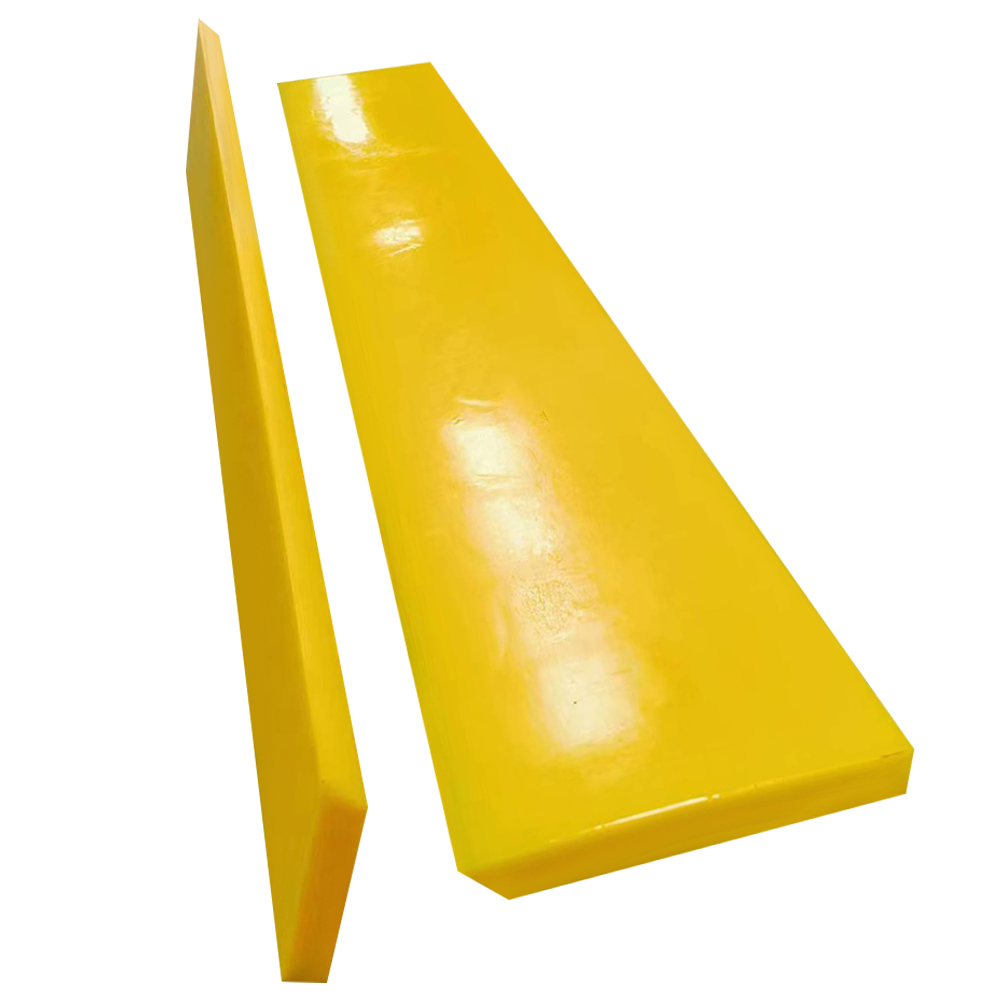
Transitioning from reactive maintenance to proactive asset protection changes how facilities manage equipment lifecycles. The primary success criterion is isolating physical wear to easily replaceable, low-cost polyurethane wear pads. You protect the core infrastructure by sacrificing the polymer layer. This strategy prevents catastrophic failure of primary structural components and keeps the main production lines operational without requiring extensive welding or metal fabrication repairs.
Elastomeric barriers prevent scoring, galling, and structural fatigue on expensive steel tracks. When metal slides against metal, the resulting friction generates heat and micro-welding, which tears away material. Installing material handling wear strips creates a protective buffer. This buffer absorbs the abrasive forces of moving chains, belts, and product payloads. It keeps guides, chutes, and structural frames intact over years of continuous operation. In heavy-duty applications like drag chain conveyors, the constant scraping of steel flights against a steel trough will quickly wear through the metal. A polyurethane barrier takes that abuse, wearing down slowly and predictably.
Friction directly dictates the energy required to move bulk materials. Integrating a low friction liner decreases the coefficient of friction across sliding surfaces. This reduction lowers the torque requirements and startup draw of conveyor motors. Motors run cooler and consume less electricity. The overall energy efficiency of the material handling system improves significantly. When you multiply this friction reduction across hundreds of feet of conveyor lines, the reduction in electrical load on the drive motors is substantial, leading to fewer motor burnouts and less strain on gearboxes.
Heavy industrial environments struggle with dangerous noise levels. Polyurethane excels at absorbing kinetic energy and suppressing structural resonance. When heavy aggregates hit a steel chute, the noise is deafening. Lining that same chute with polyurethane dampens the impact. This reduces facility decibel levels, helping operations meet strict OSHA noise exposure standards while protecting workers' hearing. Beyond just noise, the vibrational dampening protects the welds and bolted joints of the supporting structure from vibrating loose over time.
High-quality abrasion resistant strips prevent premature wear on adjacent moving components. Bearings, slides, gears, cams, bushings, and rollers all benefit from a smoother, shock-absorbing interface. The elastomeric nature of the strips absorbs micro-impacts that would otherwise transfer directly into sensitive bearing races. This extends the life of the entire mechanical assembly. For example, in a linear motion slide, a polyurethane guide prevents the metal carriage from chattering against the rail, ensuring smooth operation and extending the life of the linear bearings.
Polyurethane is highly versatile, making it suitable for diverse industrial environments. Its unique blend of elasticity and toughness solves specific mechanical problems across different sectors. Understanding where to deploy these materials maximizes their protective benefits.
Conveyors rely heavily on smooth material flow and precise belt tracking. Without proper guides, belts wander, fray, and eventually snap. Polyurethane provides the necessary guidance without damaging the belt edges.
Gravity-fed drop zones experience the most violent impacts in bulk handling. The constant bombardment of heavy, sharp materials will quickly destroy unprotected steel.
High-velocity sorting requires precision and gentle handling to prevent product damage. Scuffed packages lead to customer complaints and rejected shipments.
Automated machinery requires tight tolerances and low friction to operate accurately. Metal-on-metal sliding creates unpredictable friction spikes.
Outdoor and coastal environments destroy standard metal components rapidly through corrosion and abrasive wind-blown sand.
Selecting the right wear material requires analyzing the specific mechanical forces at play. Polyurethane, UHMW (Ultra-High Molecular Weight Polyethylene), and steel each have distinct performance profiles. Choosing the wrong material leads to premature failure and wasted maintenance efforts.
Polyurethane offers high elasticity and impact absorption. When heavy rocks hit a polyurethane liner, the material compresses and rebounds, dissipating the energy. UHMW performs exceptionally well under low-load, pure sliding wear conditions but lacks the same impact resilience. If a heavy, sharp object hits UHMW, it can crack or permanently dent. Hard metals resist sliding wear but transfer all impact energy directly into the supporting structure, leading to weld fatigue and structural cracking over time.
Polyurethane possesses excellent elastic memory. It can undergo high-strain elastic deformation and return to its original profile. UHMW and soft metals often suffer from permanent gouging or cold flow under heavy, continuous point loads. When a sharp object presses into polyurethane, it yields and recovers. When it presses into UHMW, it often leaves a permanent scratch or dent, which can then catch material and cause blockages.
Industrial environments expose equipment to various corrosive agents. Polyurethane formulations resist oils, greases, solvents, and mild acids much better than standard carbon steel. While UHMW also offers excellent chemical resistance, polyurethane provides a better seal and gasket-like fit when bolted down, preventing corrosive liquids from seeping behind the liner and rusting the steel substrate.
| Material | Impact Absorption | Sliding Friction | Elastic Memory | Noise Dampening | Cold Flow Resistance |
|---|---|---|---|---|---|
| Polyurethane | Excellent | Good to Excellent (with additives) | High | Excellent | High |
| UHMW PE | Moderate | Excellent | Low (Prone to cold flow) | Moderate | Low |
| Carbon Steel | Poor (Transfers shock) | Poor (High friction) | None | Poor (Amplifies noise) | High |
| Rubber | Good | Poor (High drag) | Moderate | Good | Moderate |
Not all polyurethane is created equal. Specifying the correct formulation ensures the strips perform as expected in your specific application. You must match the physical properties of the polymer to the mechanical demands of the equipment.
Matching Shore hardness scales to application profiles is critical for success. The durometer dictates how the material will behave under load.
Engineers must decide between off-the-shelf flat rectangular strips and custom-molded profiles. Standard strips are cost-effective for simple flat chutes and side guides. Custom-machined profiles, such as V-grooves, U-channels, and snap-on tracks, are necessary for proprietary guide systems and complex conveyor belt tracking. Custom profiles ensure a perfect fit, reducing the chance of material getting trapped behind the wear strip.
Base polyurethane can be modified for specific performance traits. Evaluating performance enhancements is key for demanding environments. Adding molybdenum disulfide (MoS2), graphite, or specialized wax additives helps achieve an ultra-low friction coefficient. These internal lubricants continuously migrate to the surface, reducing drag without requiring external greasing. This is particularly useful in packaging lines where external grease would contaminate the products.
Food and agricultural processing require strict material safety. Selecting FDA-approved, non-toxic food-grade polyurethane formulations is mandatory for dry agricultural goods, grain handling, and food processing lines. These specific grades ensure no harmful chemicals leach into the product stream during abrasive contact. They are also formulated to resist the harsh washdown chemicals used in food plant sanitation procedures.
Even the best materials fail if installed incorrectly. Understanding the physical limitations and installation requirements of polyurethane wear strips prevents premature breakdowns and ensures you get the maximum lifespan out of the investment.
Temperature fluctuations drastically affect polymer dimensions. Ignoring thermal expansion is a common cause of installation failure.
Fastening elastomeric strips requires careful planning to handle shear forces generated by moving materials.
Moisture and sunlight degrade certain polymers over time. Mitigating hydrolysis (moisture degradation) is necessary in high-humidity or high-temperature zones. Specify polyether-based urethanes for wet environments, as polyester-based urethanes will break down and crumble when exposed to constant moisture. For outdoor applications, select UV-stabilized formulations to prevent the material from becoming brittle and cracking under constant sun exposure.
Wear strips are sacrificial by design. Establishing baseline wear measurements allows maintenance teams to track degradation and plan replacements during scheduled downtime.
A: Polyurethane generally outlasts UHMW in high-impact and abrasive particle environments due to its elastic memory. In pure, low-load sliding applications, UHMW may last longer. Lifespan depends heavily on the specific application, but polyurethane often provides 2 to 3 times the wear life in high-impingement zones.
A: They are typically secured using mechanical fasteners like countersunk bolts or elevator bolts to keep hardware away from the wear surface. Alternatively, they can be chemically bonded using industrial adhesives, or purchased with a steel backing plate that can be directly welded to the frame.
A: Yes. Polyether-based polyurethane formulations are highly resistant to hydrolysis (water degradation) and perform well in wet environments. They also resist many oils, greases, and mild solvents, making them suitable for harsh industrial conditions.
A: For high-impact applications, softer formulations ranging from 60A to 80A on the Shore hardness scale are recommended. These softer grades act like heavy-duty rubber, absorbing kinetic energy and preventing the material from cracking under heavy blows.
A: A low friction liner reduces the drag between the moving conveyor belt or chain and the stationary support structure. By lowering the coefficient of friction, the conveyor motor requires less torque to move the load, directly reducing electrical power consumption.
A: You must obtain the coefficient of linear thermal expansion for the specific polyurethane grade from the manufacturer. Multiply this coefficient by the length of the strip and the maximum expected temperature change. Leave a gap between adjoining strips equal to or slightly greater than this calculated expansion value.


