

Views: 0 Author: Site Editor Publish Time: 2026-07-09 Origin: Site


Rapid nozzle degradation in industrial fluid handling creates a massive financial drain on plant operations. Constant replacement cycles, unexpected line shutdowns, and lost production time quickly eat into maintenance budgets. When you pump abrasive fluids, sharp particulates, and heavy slurries, standard metal or rigid plastic nozzles fail rapidly. This material failure destroys the internal orifice geometry. Distorted spray patterns, uneven coverage, and severe system inefficiency follow closely behind.
Engineered elastomers provide a definitive solution for high-wear environments. Polyurethane absorbs and deflects kinetic energy from solid particles, maintaining precise orifice dimensions far longer than traditional materials. Establishing a comprehensive engineering framework helps operators evaluate and specify the correct Polyurethane Spray Nozzles for specific operational demands. Understanding durometer ratings, chemical compatibility, and fluid dynamics ensures maximum system uptime and consistent spray accuracy across your entire processing line.
A successful nozzle deployment in abrasive conditions requires consistent flow rates, maintained spray angles, drift control, and maximum system uptime. Traditional materials struggle to meet these criteria when processing heavy slurries. Stainless steel, hardened brass, and structural ceramics suffer from micro-abrasions and chipping. Rigid metals cannot absorb the kinetic energy of sharp particulates. Instead, the material slowly erodes under constant sliding friction and direct impact.
Polyurethane presents a completely different wear mechanism. Elastomers absorb and dissipate the kinetic energy from abrasive particulates. The material yields slightly upon impact and returns to its original shape. This resilience prevents the micro-gouging that destroys metal orifices. As a result, a polyurethane spray nozzle maintains its precise physical dimensions significantly longer.
Nozzle wear directly alters orifice geometry over time. Enlarged or asymmetrical orifices lead to pressure drops, distorted fluid distribution, and poor droplet size consistency. Poor droplet consistency causes severe over-spraying or under-spraying. Polyurethane prevents this performance degradation. Selecting this engineered elastomer balances upfront material requirements with extended longevity and high-precision performance accuracy.
To understand the performance gap, we must look at how different materials handle specific types of wear. Impact abrasion occurs when particles strike the surface at steep angles. Sliding abrasion happens when particles scrape along the internal walls of the nozzle. Polyurethane excels at handling both, provided you select the correct formulation.
| Material Type | Impact Abrasion Resistance | Sliding Abrasion Resistance | Failure Mechanism |
|---|---|---|---|
| Stainless Steel (316) | Moderate | Low | Micro-gouging and rapid orifice expansion |
| Hardened Brass | Low | Low | Severe erosion and pattern distortion |
| Alumina Ceramic | Low | High | Brittle fracturing and catastrophic cracking |
| Polyurethane (Elastomer) | High | High | Thermal degradation or chemical swelling |
When you run a sand washing plant or a mineral processing facility, the fluid velocity inside the pipe network accelerates the wear rate exponentially. A standard steel nozzle might hold its spray pattern for a few weeks. After that, the internal vanes and the exit orifice wash out. The pump continues to push fluid, but the spray pattern collapses into a solid stream. This wastes water and fails to clean the aggregate.
Switching to an elastomer changes the maintenance schedule entirely. The flexible nature of the polymer matrix allows it to take a beating from quartz, silica, and coal dust without losing its shape. You get consistent droplet sizes, which means your dust suppression systems actually suppress dust instead of just flooding the conveyor belt.
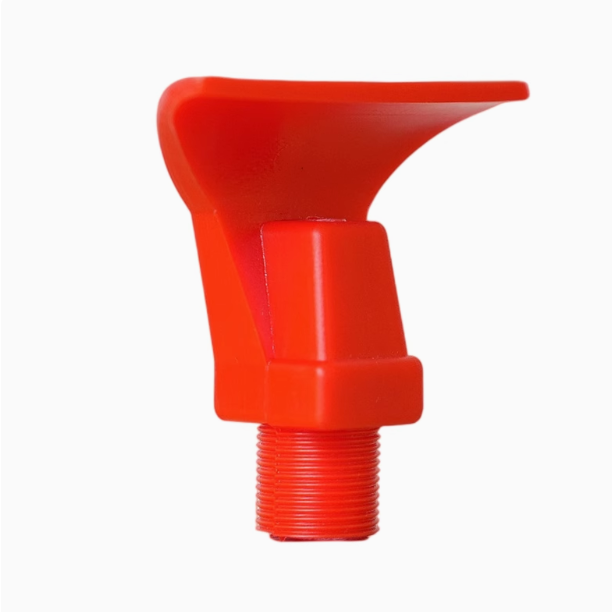
Choosing the correct Shore hardness dictates field performance. Durometer options typically range from 80A to 70D. Softer urethanes offer high resilience. They excel at absorbing large, blunt particle impacts in heavy aggregate processing. Harder urethanes perform better against sliding abrasion, fine erosion, and higher system pressures. Matching the durometer to the specific particulate profile prevents premature material tearing.
Operators must navigate dual-threat environments where chemical exposure meets physical wear. Corrosive chemical slurries containing acids, alcohols, or oxides interact aggressively with elastomers. Chemical exposure and extreme pH levels accelerate degradation if the specific polyurethane formulation lacks compatibility. Physical abrasion strips away chemically softened layers, rapidly destroying the nozzle. Verifying chemical-abrasion synergy ensures the material withstands both threats simultaneously.
Elastomeric nozzles possess structural limitations under high pressure. System PSI and GPM requirements must align with the tensile strength of the specific polyurethane formulation. Excessive pressure causes material ballooning, orifice distortion, or catastrophic tearing. Engineers must match the operating pressure to the structural limits of the molded part.
Physical sizing and connection configurations demand precise calibration. Secure installation requires specific connection types, including standard NPT/BSPT threads, quick-connect couplings, or flanged fittings. Calibration protocols ensure the physical nozzle specifications align perfectly with existing system pump curves. Proper alignment prevents pressure drops and guarantees the intended flow rate reaches the target surface.
Let us break down the durometer selection process. The Shore A scale measures softer, more flexible materials. The Shore D scale measures harder, more rigid plastics. If you pump a slurry with large, jagged rocks, a softer 85A polyurethane acts like a trampoline. The rocks hit the internal walls and bounce off without cutting the material. If you pump a high-velocity stream of fine silica sand, a harder 95A or 60D polyurethane provides a slicker surface that resists the sandpaper effect of the sliding particles.
Chemical compatibility requires a deep dive into the fluid makeup. Polyurethane comes in two primary chemical families: polyether and polyester. Polyether urethanes handle water and moisture exceptionally well. They resist hydrolysis, making them perfect for wet washdown applications. Polyester urethanes offer superior resistance to oils, solvents, and sliding abrasion, but they break down quickly in hot water. You must specify the correct base chemistry before molding the nozzle.
Pressure ratings dictate the wall thickness of the nozzle design. A thin-walled elastomer nozzle will expand like a balloon under 100 PSI of pressure. This expansion changes the internal geometry and ruins the spray pattern. To combat this, manufacturers increase the wall thickness or mold the polyurethane around a rigid metal insert. The metal insert provides structural rigidity for the threads, while the polyurethane handles the abrasive wear at the orifice.
Mining, aggregate washing, sand processing, and flue gas desulfurization demand highly specialized equipment. A slurry spray nozzle requires large free-passage designs. Vortex or spiral configurations prevent internal clogging from heavy particulate loads. These open internal geometries allow rocks, sand, and thick sludge to pass through without bridging or blocking the flow path.
Washdown, dust suppression, and surface preparation utilize polyurethane nozzles in vibratory screening and industrial parts washing. These applications require strict drift control and specific droplet size classifications. Fine, medium, coarse, and extremely coarse droplet categories dictate deposition efficiency. Proper droplet sizing maximizes surface coverage while minimizing environmental drift in open-air processing facilities.
Evaluating spray patterns and fluid dynamics ensures proper coverage. Flat fan patterns deliver high-impact linear coverage for conveyor washing. Full cone patterns provide uniform distribution over a circular area, ideal for dust suppression. Hollow cone patterns atomize fluids efficiently for gas scrubbing. The target coverage area, impact requirements, and slurry viscosity dictate the final pattern selection.
When you design a spray header for a vibratory screen, the overlap of the spray patterns determines the washing efficiency. If the nozzles wear out unevenly, the patterns stop overlapping. You end up with dry streaks on the screen deck, which leads to blinding and lost production. Polyurethane maintains that critical overlap for months instead of days.
Flue gas desulfurization (FGD) scrubbers present a unique challenge. The limestone slurry used to scrub sulfur dioxide from exhaust gas is highly abrasive. The nozzles sit inside a massive tower, spraying millions of gallons of slurry continuously. Replacing these nozzles requires shutting down the entire power plant. Using a highly durable elastomer extends the run time between outages, keeping the plant online and generating power.
Droplet size control matters immensely in dust suppression. If the droplets are too large, they fall straight to the ground and turn the dust into mud. If the droplets are too small, the wind blows them away before they hit the dust source. You need a nozzle that produces a specific micron size and holds that size over time. As a metal nozzle wears, the orifice gets bigger, and the droplets get larger. Polyurethane locks in the droplet size by resisting orifice expansion.
Standard off-the-shelf nozzles fit many common industrial applications. However, specific trigger points necessitate custom engineering. Retrofitting legacy or proprietary OEM equipment often requires unique dimensions. Non-standard pipe fittings and tight space constraints demand specialized external geometries. Demanding non-standard spray angles or highly specific flow distribution profiles also require custom molding.
The prototyping and tooling process follows a strict engineering timeline. A custom polyurethane nozzle begins with precise CAD design. Engineers utilize finite element analysis for fluid dynamics to simulate flow characteristics before cutting steel. Mold creation follows the approved digital models. Initial run testing verifies the physical part meets all dimensional tolerances and spray pattern requirements.
Scalability and volume considerations dictate the procurement strategy. Custom tooling requires an upfront investment. Operators must analyze the operational break-even point. The reduction in maintenance frequency, fewer replacement parts, and minimized operational downtime typically justify the initial tooling costs for high-wear applications.
Many older processing plants run on equipment built decades ago. The original equipment manufacturers might not exist anymore, or they stopped making the specific spray bars you need. You cannot simply buy a replacement off the shelf. You have to reverse-engineer the existing parts. This is where custom molding shines. You can take a worn-out metal nozzle, redesign it for better flow, and cast it in high-grade polyurethane.
The molding process allows for internal geometries that are impossible to machine out of solid metal. You can create smooth, sweeping internal curves that reduce turbulence and pressure drops. Less turbulence means less internal wear. The fluid glides through the nozzle instead of slamming into sharp machined corners.
When evaluating a custom run, consider the batch size. Pouring polyurethane requires a master mold. The cost of machining that aluminum or steel mold gets distributed across the number of parts you order. If you only need five nozzles, the cost per unit will be high. If you need five hundred nozzles for a massive scrubber tower, the tooling cost becomes negligible compared to the performance gains.
Polyurethane possesses strict thermal limitations. Standard formulations operate safely between 140°F to 180°F (60°C to 82°C). Exceeding these maximum operating temperatures causes catastrophic material softening and rapid failure. High-heat environments require immediate cooling mitigations or specialized hybrid polymer formulations to maintain structural integrity.
Installation torque directly impacts fitting integrity. Over-tightening elastomeric threads strips or distorts the nozzle inlet. Distorted threads cause immediate leaks and misalignment. Installation best practices require specifying exact torque limits. Utilizing metal-reinforced hex bases molded directly into the polyurethane provides rigid gripping points for wrenches, preventing thread damage during installation.
System debris poses a constant threat to fluid handling networks. An abrasion resistant nozzle handles suspended abrasives exceptionally well. However, oversized foreign debris causes mechanical blockages regardless of the material. Implementing appropriate upstream strainers and properly sized filtration systems prevents large debris from reaching the nozzle orifice.
Let us look at temperature failures in the field. A plant operator decides to run hot water through a standard polyurethane washdown system to clean heavy grease off a conveyor. The water hits 200°F. Within an hour, the nozzles soften, expand, and blow right off the threaded pipes. The material did not fail due to abrasion; it failed because the operator ignored the thermal limits. Always check the fluid temperature before specifying an elastomer.
Thread damage during installation happens constantly. Maintenance crews are used to cranking down steel pipes with heavy pipe wrenches. If you apply that same force to a plastic or urethane thread, you will shear it right off. You must train your crews to hand-tighten elastomeric fittings and use a torque wrench for final seating. Better yet, specify nozzles with molded-in brass or stainless steel thread inserts. This gives you the wear resistance of urethane at the tip and the mechanical strength of metal at the connection.
Filtration prevents catastrophic plugging. A vortex nozzle can pass a lot of solids, but it cannot pass a stray bolt or a chunk of wood that fell into the slurry tank. When a nozzle plugs, the fluid velocity in the surrounding nozzles increases, accelerating their wear. Install basket strainers upstream of the spray headers. Size the strainer mesh to be slightly smaller than the maximum free passage of your smallest nozzle.
Polyurethane spray nozzles deliver exceptional reliability for cold-to-warm abrasive fluid applications. They absorb kinetic energy, resist micro-gouging, and maintain precise orifice geometries far longer than rigid metals. Success depends entirely on matching the system parameters with the material's physical limits.
Follow a strict evaluation process for shortlisting. Verify fluid temperature, chemical profile, and solid particulate sizing. Calculate operating pressure, target droplet size, and spray pattern requirements. Determine if a standard off-the-shelf model suffices or if custom engineering is required.
A: Polyurethane typically delivers a 3x to 10x lifespan multiplier over standard steel. The exact longevity depends heavily on particulate velocity, particle sharpness, and overall slurry concentration. Elastomers absorb the impact energy that normally chips and erodes rigid metals.
A: Standard thermal limits range from 140°F to 180°F (60°C to 82°C). Elevated temperatures soften the material, drastically reducing its durometer and wear resistance. Exceeding these limits leads to structural distortion and rapid orifice failure.
A: Abrasive resistance does not guarantee chemical resistance. Polyurethane handles many oils, alcohols, and mild acids effectively. However, strong acids, bases, or ketones require specialized ester or ether-based formulations. Always verify chemical compatibility before installation.
A: These nozzles serve heavy industrial sectors handling suspended solids. Core applications include mining operations, coal preparation, aggregate washing, sand production, and pollution control systems like flue gas desulfurization scrubbers.
A: Custom engineering is necessary when dealing with non-standard mounting configurations, tight equipment envelopes requiring unique spray angles, or when replacing discontinued proprietary OEM parts that are no longer commercially available.
A: Yes. Orifice erosion physically enlarges and distorts the nozzle opening. This leads to larger, non-uniform droplets, significant loss of system pressure, pattern streaking, and increased environmental drift due to poor fluid atomization.


