

Views: 0 Author: Site Editor Publish Time: 2026-07-06 Origin: Site


Pipeline failure at directional change points carries a massive operational cost for any processing facility. Kinetic energy and abrasive forces concentrate heavily at these junctions, turning standard bends into high-risk blowout zones. High-velocity slurry creates extreme localized abrasion and turbulent wear that strips away metal layer by layer. This constant bombardment leads to frequent blowouts, unplanned downtime, and heavy replacement demands for standard steel elbows. Transitioning from sacrificial steel to energy-absorbing elastomers changes this dynamic completely. A Polyurethane Lining Elbow shifts maintenance from reactive patching to predictable lifecycle management. By absorbing the kinetic energy of sharp particles rather than resisting it rigidly, elastomeric linings prevent the micro-cutting that destroys carbon steel. We will break down the mechanics of pipeline wear, the material advantages of elastomers, and the exact specifications needed to protect your infrastructure from aggressive slurry flows.
Slurry moving through a bend experiences two distinct types of wear that destroy standard piping. Direct particle impact occurs at the outer radius of the bend. Here, solid materials strike the wall with full kinetic force. Sliding friction happens along the inner curve and the sidewalls as the material drags across the surface. The angle of impingement dictates the severity of material degradation. Steep angles cause heavy gouging and deep pitting. Shallow angles result in continuous scraping that shaves the metal down over time. Understanding these distinct forces helps you select the right protective materials for specific pipeline sections. You cannot treat a 90-degree bend the same way you treat a straight run of pipe.
When pumping heavy tailings or sharp sand, the outer wall of a standard elbow takes a massive beating. The particles do not just flow; they crash into the steel. This crashing effect transfers kinetic energy directly into the pipe wall. If the wall material cannot absorb that energy, it fractures or chips. Over weeks and months, these microscopic chips turn into visible wear patterns. Eventually, the wear pattern breaches the pipe wall completely. You end up with a slurry spill, a halted pump, and a messy cleanup job that costs thousands in lost production.
High-velocity particles accelerate degradation rapidly. Pump-adjacent turbulence adds chaotic flow patterns to the mix, making the wear highly unpredictable. Fluid dynamics cause secondary flow patterns, known as Dean vortices, inside elbows. These vortices exacerbate localized scouring by trapping abrasive particles in a spinning motion against the pipe wall. High-wear hot spots frequently develop within the first few meters of centrifugal pump discharge lines. Managing slurry pipe wear requires controlling these turbulent zones effectively before they destroy the entire manifold.
We see this constantly in the field. A new pump gets installed, and within a month, the first elbow downstream blows out. The velocity coming right off the impeller is at its peak. The slurry has not had time to settle into a laminar flow. It hits that first directional change with maximum turbulence. The Dean vortices act like a grinder, spinning sand and rock against the steel. If you do not line that specific elbow, you will be replacing it constantly. You have to look at the fluid dynamics, not just the static pressure rating of the pipe.
Unlined carbon steel struggles to absorb kinetic energy from dense, sharp-edged slurries. The rigid metal surface takes the full force of the impact. The steel cannot yield or bounce the particles back into the flow stream. This initiates a cycle of micro-cutting and gouging. The pipe wall thins progressively over time, often unevenly. Eventually, this localized thinning leads to catastrophic pipe failure. Steel simply lacks the elastomeric memory needed to survive constant bombardment from aggressive materials.
Many operators try to solve this by using thicker steel or hardened alloys. While AR400 or similar hardened steels last longer than standard carbon steel, they still rely on hardness to resist wear. Hardness works against sliding abrasion, but it fails against direct impact. Hard materials are brittle. When a large rock hits a hard steel elbow, it can cause micro-fractures. These fractures grow, and the steel spalls off in chunks. You need a material that absorbs the hit rather than trying to stand rigid against it.
Polyurethane features high tensile strength and exceptional tear resistance. Its elastomeric memory allows the lining to absorb kinetic energy efficiently. When particles strike, the material yields slightly and rebounds. It recovers without permanent deformation. This bounce-back effect prevents the micro-cutting that destroys rigid metals. It provides a resilient shield for the underlying steel shell, keeping the structural integrity of the pipe intact while the lining takes the abuse.
Think of it like throwing a rock at a concrete wall versus throwing a rock at a heavy rubber tire. The concrete chips and cracks. The tire bounces the rock off and looks exactly the same. Polyurethane does this on a molecular level inside your pipeline. It absorbs the kinetic energy of the slurry particles and dissipates it as low-level heat. The particle loses its cutting force and gets pushed back into the fluid stream. This elastomeric property makes it vastly superior to rigid metals in high-impact zones.
Different materials serve different operational needs across a plant. Natural rubber handles large, blunt impact well but remains susceptible to tearing from sharp rocks. Ceramic linings offer excellent protection for sliding abrasion but turn brittle under high direct impact. Rigid polyurethane pipe elbow configurations provide a strong middle ground. They outperform flexible rubber mining hoses in high-turbulence pump connections where hoses might flex and fail. Polyurethane handles mixed-particle slurries better than most alternatives on the market.
| Material Type | Impact Resistance | Sliding Abrasion Resistance | Best Application Scenario |
|---|---|---|---|
| Standard Carbon Steel | Low | Low | Low-velocity, clear fluids |
| Alumina Ceramic Lined | Low (Brittle) | Very High | Fine particles, sliding wear |
| Natural Rubber | High (Blunt) | Medium | Large rocks, blunt impact |
| Polyurethane Elastomer | High | High | Mixed slurries, high turbulence |
When you walk a processing plant, you often see a mix of these materials. You might see ceramic on the long straight runs where sliding friction is the main issue. You might see heavy rubber hoses on the suction side of the pumps. But on the discharge side, where you have high pressure, high velocity, and mixed particle sizes hitting a directional change, polyurethane is the standard. It bridges the gap between the tear resistance needed for sharp particles and the impact resistance needed for heavy volume.
Elastomers do more than just absorb physical hits from rocks and sand. Polyurethane acts as an impermeable barrier against corrosive carrier fluids. It blocks chemical additives from reaching the metal pipe wall. This prevents chemical wear and internal degradation of the outer steel shell. You get physical, corrosive, and chemical protection in a single application, which simplifies your maintenance planning and reduces the number of failure modes you have to monitor.
In many mining operations, the slurry is not just water and rock. It contains flotation chemicals, acids, or alkaline solutions used in the extraction process. If you use bare steel, the abrasion scrapes away the oxidized layer, exposing fresh metal to the chemicals. The chemicals eat the fresh metal, and the abrasion scrapes it away again. This combined abrasion-corrosion cycle destroys pipes incredibly fast. Polyurethane stops this cycle completely by sealing the steel away from the fluid.
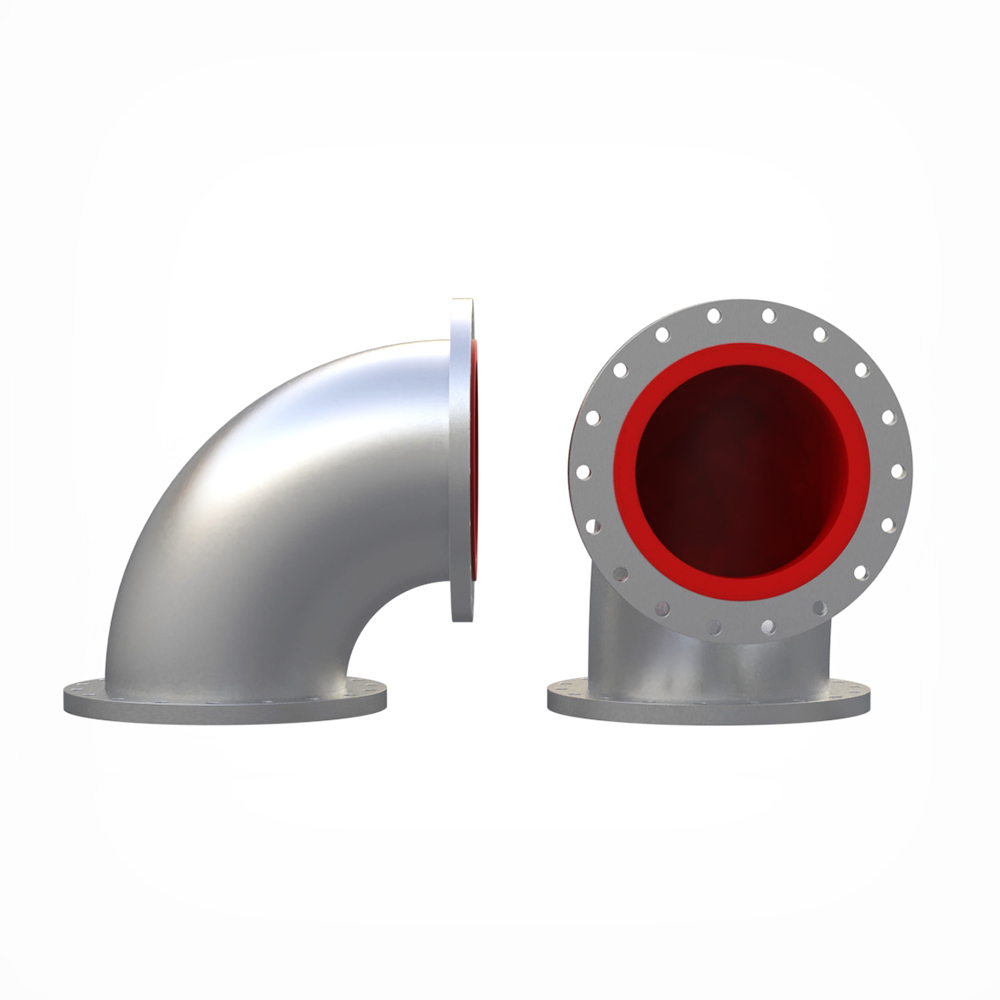
You must identify critical nodes in the pipeline layout before spending money on upgrades. Discharge manifolds, header joins, and high-velocity drops require immediate attention. Placing an abrasion resistant elbow at these junctions delivers the highest protective yield. Focus your upgrades on areas with the most severe directional changes and the highest fluid velocities. Do not waste budget lining low-pressure, low-velocity gravity drains unless you have a specific corrosion issue.
Walk the line and look for the patch jobs. Wherever you see a pipe with a welded patch, a clamp, or a pile of epoxy on the outside, that is your target zone. These are the areas where the fluid dynamics are working against the steel. By mapping these failure points, you can create a targeted replacement schedule. You swap out the worst offenders with lined fittings first, stabilizing the plant's operation before moving on to the less critical areas.
Long-radius sweeping bends reduce the angle of particle impact significantly. They distribute wear more evenly across the fitting rather than concentrating it in one spot. Short-radius elbows force sharp directional changes, concentrating damage in small areas and causing rapid failure. Sweeping bends also provide significant flow efficiency gains. They reduce pressure drops and lower the energy required to pump the slurry through the system.
In tight pump houses, you might be forced to use short-radius elbows. If that happens, you need to compensate by specifying a thicker polyurethane lining on the outer curve. You know the wear will be concentrated, so you build up the defense in that specific area. Some manufacturers can cast elbows with an eccentric lining, putting more urethane on the outside radius where the impact occurs, while keeping the inside radius thinner to maintain the internal diameter.
Matching the Shore hardness to the slurry profile is essential for long-term success. Specify softer polyurethane for high-impact zones where you need maximum bounce. Use harder polyurethane for fine, sliding abrasion where you need cut resistance. Calculate the optimal lining thickness based on expected wear rates and pipeline diameter. Thicker linings offer longer life but reduce the internal diameter slightly, which can affect flow rates.
Durometer is a measure of hardness. A 60 Shore A urethane is relatively soft, like a car tire. It absorbs big hits well. A 90 Shore A urethane is hard, like a skateboard wheel. It resists sliding wear and cutting from sharp sand. If you put a hard urethane in a high-impact zone, it might crack. If you put a soft urethane in a sliding wear zone, it might wear away too quickly. You have to match the chemistry to the physical reality of the slurry.
Seamless transitions between the elbow and adjacent straight pipes prevent turbulence. lined pipe fittings require flush lining at the flanges. Uneven joints create localized turbulence. This turbulence leads to premature wear at the connection points, often destroying the flange before the elbow itself wears out. Ensure all gaskets and flanges align perfectly during installation.
When bolting up a lined elbow, the urethane often wraps over the face of the flange. This acts as a built-in gasket. You must torque the bolts evenly in a star pattern. If you over-torque one side, you crush the urethane and create a lip inside the pipe. That lip catches the slurry flow, creating a vortex right at the joint. Within a few weeks, that vortex will scour out the steel behind the flange, leading to a leak. Proper installation is just as important as proper material selection.
Empirical data from the field demonstrates significant longevity gains when switching to elastomers. Urethane-lined pipe fittings outlast unlined steel by a factor of two to six times. The exact multiplier depends on slurry density, particle sharpness, and fluid velocity. Sand, mine tailings, fly ash, and coal slurry all show extended lifespan metrics when utilizing elastomeric linings instead of bare metal.
Consider a silica sand wash plant. Bare steel elbows on the cyclone feed lines might last three weeks before blowing out. Replacing them with polyurethane-lined elbows often extends that lifespan to six months or more. That is not just a minor improvement; it fundamentally changes how the maintenance team operates. They stop fighting daily fires and start planning scheduled change-outs during normal plant downtime.
Reducing maintenance frequency directly impacts operational efficiency and plant profitability. Minimizing emergency patch jobs saves hundreds of labor hours per year. Eliminating catastrophic blowout risks keeps production running and prevents environmental spills. These factors combine to cut overall elbow maintenance efforts by approximately 75 percent. Predictable wear patterns allow for scheduled replacements rather than emergency shutdowns in the middle of a production run.
Emergency downtime is the most expensive metric in any processing plant. When a pipe blows, you lose the production time, you pay mechanics overtime to fix it, and you often have to rent vac-trucks to clean up the spilled slurry. By installing lined fittings, you eliminate the surprise blowouts. You can measure the wear during scheduled inspections and replace the fitting on your terms, not when the pipe decides to fail.
Higher initial capital expenditure often deters immediate upgrades during budget reviews. However, the extended service life changes the math completely. Polyurethane lined fittings deliver up to 50 percent lower cost-per-foot over the pipeline’s total service life. You buy fewer replacement parts, spend less time installing them, and keep the plant running longer between shutdowns.
If a steel elbow costs $500 and lasts one month, you spend $6,000 a year on parts alone, plus the labor to change it 12 times. If a lined elbow costs $1,500 but lasts eight months, you spend $2,250 a year on parts and only change it 1.5 times. The upfront cost is triple, but the annual spend is less than half. This is the logic you must present to procurement teams when specifying these materials.
Standard polyurethane has a strict thermal degradation threshold that you cannot ignore. Applications are typically limited to under 180°F (82°C). Exceeding this limit causes the elastomer to melt, blister, or degrade rapidly. High-temperature alternative materials or specialized urethane blends are required for hot slurry streams. Always verify the maximum operating temperature of your process before installing urethane.
If you run a process that occasionally spikes in temperature, standard urethane will fail. The material loses its tensile strength when heated. It becomes soft and tears easily under the impact of the slurry. If your plant uses steam injection or processes hot chemical slurries, you must work with the manufacturer to formulate a high-temp urethane, or switch to a different lining material entirely, like rubber or ceramic, depending on the exact parameters.
Certain chemicals attack urethane bonds aggressively, destroying the lining from the inside out. Specific solvents, highly concentrated acids, or alkaline solutions cause severe problems. They can make the lining swell, soften, or delaminate from the steel shell. Always verify chemical compatibility with the manufacturer before specifying a lining material for a chemical process line.
Hydrocarbons, for example, can cause standard urethane to swell. When the lining swells inside a rigid steel pipe, it buckles and pulls away from the wall. Once it delaminates, the slurry flow catches the loose urethane and rips it out in chunks. You must provide the exact chemical makeup of your slurry to the lining manufacturer so they can adjust the polymer chemistry to resist those specific compounds.
Proper rigging and installation prevent accidental damage before the pipe even sees slurry. Do not drop or crush the internal lining with forklift tines. Protect the flange seals during transport by leaving the wooden covers on until the last minute. Never weld near lined fittings. Welding heat easily transfers through the steel and destroys the elastomer lining inside, ruining the fitting instantly.
We see this mistake constantly during plant expansions. A welder needs to attach a bracket to a pipe, so they strike an arc on the outside of a lined elbow. The steel heats up to hundreds of degrees in seconds. The urethane inside melts and burns away, leaving a bare spot on the inner wall. When the plant starts up, the slurry hits that bare spot and blows a hole in the pipe within days. You must enforce strict no-welding zones around all lined components.
A: Standard polyurethane linings typically withstand temperatures up to 180°F (82°C). For applications exceeding this threshold, specialized high-temperature urethane blends or alternative materials must be specified to prevent thermal degradation and loss of tensile strength.
A: Polyurethane excels at absorbing direct, heavy impact due to its elastomeric memory. Ceramic linings are extremely hard and resist fine sliding abrasion better, but they are brittle and prone to cracking under heavy, blunt impact from large rocks.
A: Generally, no. The internal steel surface must be completely clean, structurally sound, and properly prepared for the urethane to bond correctly. Used elbows often have uneven wear and contamination that prevent proper adhesion.
A: Long-radius or sweeping bends are ideal. They reduce the angle of impingement, allowing particles to glide along the curve rather than striking the outer wall directly, which distributes wear evenly across the fitting.
A: Maintenance teams often use ultrasonic thickness gauges on the outer steel shell, but measuring the internal elastomer requires specialized ultrasonic probes calibrated for polyurethane, or scheduled visual inspections during planned plant shutdowns.
A: Adding a lining does reduce the internal diameter. Engineers must account for this by either increasing the outer pipe size to maintain the required internal diameter or adjusting pump pressure to handle the slight flow restriction.


