

Views: 0 Author: Site Editor Publish Time: 2026-08-05 Origin: Site


Unplanned downtime and inefficient classification in mineral processing circuits directly erode plant profitability. This operational drag often stems from overlooked wear in separation equipment. The high-velocity, abrasive nature of slurry inevitably degrades internal components over time. This continuous erosion alters cut points, reduces throughput, and causes catastrophic pump or downstream failures if left unchecked. Maintenance teams cannot rely on run-to-failure strategies when dealing with high-wear slurry systems. Implementing a standardized, evidence-based inspection protocol transforms reactive repairs into predictable, condition-based maintenance. By tracking wear rates and operating parameters, you ensure optimal metallurgical performance and extend the asset lifecycle. This proactive approach keeps the circuit running at target capacity while remaining fully compliant with strict mine safety standards regarding pressurized vessels.
Proactive Wear Monitoring: Regular measurement of the apex and vortex finder prevents efficiency losses before they manifest as downstream bottlenecks.
Tiered Inspection Frequencies: Dividing checks into daily pre-shift walk-arounds, weekly component assessments, and shutdown internal audits minimizes production interruptions.
Visual & Photographic Documentation: Logging dimensional wear measurements (length, width, depth of erosion) and photo evidence is critical for MSHA compliance and predictive wear modeling.
Data-Driven Replacements: Tracking baseline operating pressures and feed densities provides the necessary context to determine when a liner or spigot has reached the end of its functional life.
Material Selection Impacts: Evaluating the trade-offs between polyurethane, rubber, and ceramic wear parts during inspections dictates future procurement and maintenance intervals.
Defining optimal performance establishes the foundation for a successful maintenance program. Success criteria for an ore classification hydrocyclone include maintaining stable operating pressure, achieving the correct underflow discharge angle, and holding precise cut-points. When these parameters deviate, the entire mineral processing circuit suffers. Standardized inspections provide the baseline data required to keep these variables within acceptable tolerances. You need hard data to justify component change-outs before they fail completely.
The financial impact of equipment degradation extends far beyond the cost of replacement parts. Misclassified ore routing back to the grinding circuit creates circulating load inefficiency. This wastes massive amounts of energy and reduces overall plant throughput. Conversely, passing unliberated coarse particles to the flotation circuit severely depresses recovery rates. A well-maintained mining hydrocyclone prevents these metallurgical losses by ensuring particles separate exactly at the target size. Every percentage point of lost recovery translates to massive revenue drops over a fiscal quarter.
Regulatory and safety compliance forms the backbone of any inspection protocol. Structural integrity checks prevent high-pressure slurry leaks, which pose severe hazards to site personnel. Strict alignment with Mine Safety and Health Administration (MSHA) guidelines for pressurized vessels and slurry distribution manifolds requires documented evidence. You must prove the equipment is routinely inspected and safe for continuous operation. Ignoring these checks invites safety violations and forced shutdowns.
Performance Metric | Optimal Condition | Degraded Condition (Wear Present) | Operational Impact |
|---|---|---|---|
Operating Pressure | Stable, within 5-15 PSI | Fluctuating or dropping | Inconsistent cut point, surging |
Underflow Discharge | Hollow cone (flaring) | Solid stream (roping) | Coarse material bypassing to overflow |
Vortex Finder Thickness | OEM specification | Thinned, chipped, or shortened | Misplaced coarse particles in overflow |
Apex Internal Diameter | Tight tolerance | Washed out, enlarged | Excessive water in underflow, low density |
Before any physical or visual intervention begins, strict Lockout/Tagout (LOTO) and isolation procedures must be enforced. You cannot bypass these steps. This involves isolating feed pumps, completely depressurizing the system, and draining all residual slurry from the manifolds and cyclone bodies. Failure to properly isolate the equipment results in uncontrolled releases of hazardous, high-velocity slurry.
Verify the feed pump is powered down and locked out at the motor control center.
Close and lock the main isolation valve on the feed manifold.
Open the drain valves to depressurize the system and clear residual slurry.
Verify zero pressure on the local manifold gauges before loosening any housing bolts.
Pre-shift audit readiness requires maintenance teams to review previous operational logs, historical maintenance data, and any outstanding safety work orders. This preparation flags recurring localized wear issues. Inspectors can then focus their attention on known problem areas. Understanding the recent history of the equipment prevents repetitive failures and guides more effective troubleshooting in the field.
Logging baseline data prior to shutdown is a non-negotiable step. Inspectors must record current operating parameters, including feed pressure, slurry density, and volumetric flow rate. Correlating physical wear discovered during the inspection with these operational deviations provides a clear picture. You see exactly how internal degradation impacts real-time performance.
A standardized tooling and documentation kit ensures accurate assessments. Inspectors should carry calipers, ultrasonic thickness gauges, high-resolution inspection cameras, and photo scale cards. Utilizing standardized field checklists guarantees that historical tracking remains consistent across different shifts and personnel. You cannot manage what you do not measure accurately.
The daily walk-around focuses on identifying immediate external threats to operation and safety without interrupting the process. Operators must complete this before starting their shift.
Inspect the external housing, structural support brackets, flanges, and Victaulic couplings for structural stress, weeping, or active slurry leaks.
Check auxiliary hoses, air lines, and automated pneumatic or hydraulic control valves for physical damage, wear, or fluid leaks.
Monitor the pressure gauge for severe fluctuations that indicate surging, air entrainment, or partial blockages within the feed manifold.
Observe the underflow discharge pattern. Confirm a hollow cone spray and immediately flag any roping conditions.
Listen for abnormal vibrations, metallic rattling, or cavitation noises originating from the feed pump, cyclone inlet, and manifold feed lines.
Weekly assessments require closer scrutiny of accessible components to track progressive wear rates. This requires brief pauses in operation or isolating individual cyclones in a cluster.
Measure the internal diameter of the apex using Go/No-Go gauges or calipers. Record these dimensions and compare them against OEM tolerances to track wear progression.
Check the splash skirt, underflow launder, and discharge box for accelerated, localized wear, scale buildup, or trapped debris.
Inspect the overflow pipe, overflow manifold, and siphon control valves for signs of scaling, internal build-up, or partial obstruction that could alter backpressure.
Note any localized external hot-spots on the paint or polyurethane skin that indicate an internal liner breach is imminent.
Deep internal inspections happen during planned plant outages to assess the condition of critical internal wear parts. This is where you make the call on major component replacements.
Measure wall thickness and check for uneven wear, gouging, chipping, or shortening on the vortex finder. A degraded vortex finder directly alters the cut point.
Inspect the entry point for severe gouging, localized erosion grooves, or channeling caused by coarse particle impact or high-velocity transitions.
Utilize ultrasonic thickness testing on the housing and visually inspect internal liners for blistering, peeling, delamination, or wash-outs.
Measure and record the length, width, and depth of any localized erosion channels. Take standardized photos with a scale reference card for accurate wear-rate analysis.
Examine all O-rings, gaskets, mating surfaces, and coupling seals for compression set, chemical degradation, or abrasive wear.
Transitioning from physical field booklets to mobile Computerized Maintenance Management System (CMMS) inspection forms significantly improves data accuracy and accessibility. Digital logs eliminate handwriting transcription errors, allow for immediate photo uploads, and enable automated alerts when wear measurements exceed predefined thresholds. Paper logs often lead to data silos where critical wear trends get lost in filing cabinets. You need real-time data access to make informed maintenance decisions.
To be effective, the inspection checklist must capture specific, actionable data points. Essential fields include the precise Equipment ID and Cluster Location to avoid confusion in large manifolds. Operating pressure and feed slurry density provide the operational context for the physical inspection. Measured wear dimensions, specifically the Apex ID and Vortex Finder length, must be recorded numerically. The liner material status should be categorized simply as Satisfactory, Monitor, or Replace. Finally, the form must include action items, MSHA safety sign-offs, and photographic attachment logs for compliance auditing.
Understanding how specific wear patterns translate to metallurgical losses is vital for a mineral processing separator. Severe grooving in the lower cone section disrupts the internal flow vortex, leading to increased fines misreporting to the underflow. By mapping physical features to process outcomes, maintenance teams prioritize replacements that have the highest impact on plant recovery. You do not replace parts just because they look worn; you replace them when they impact the process.
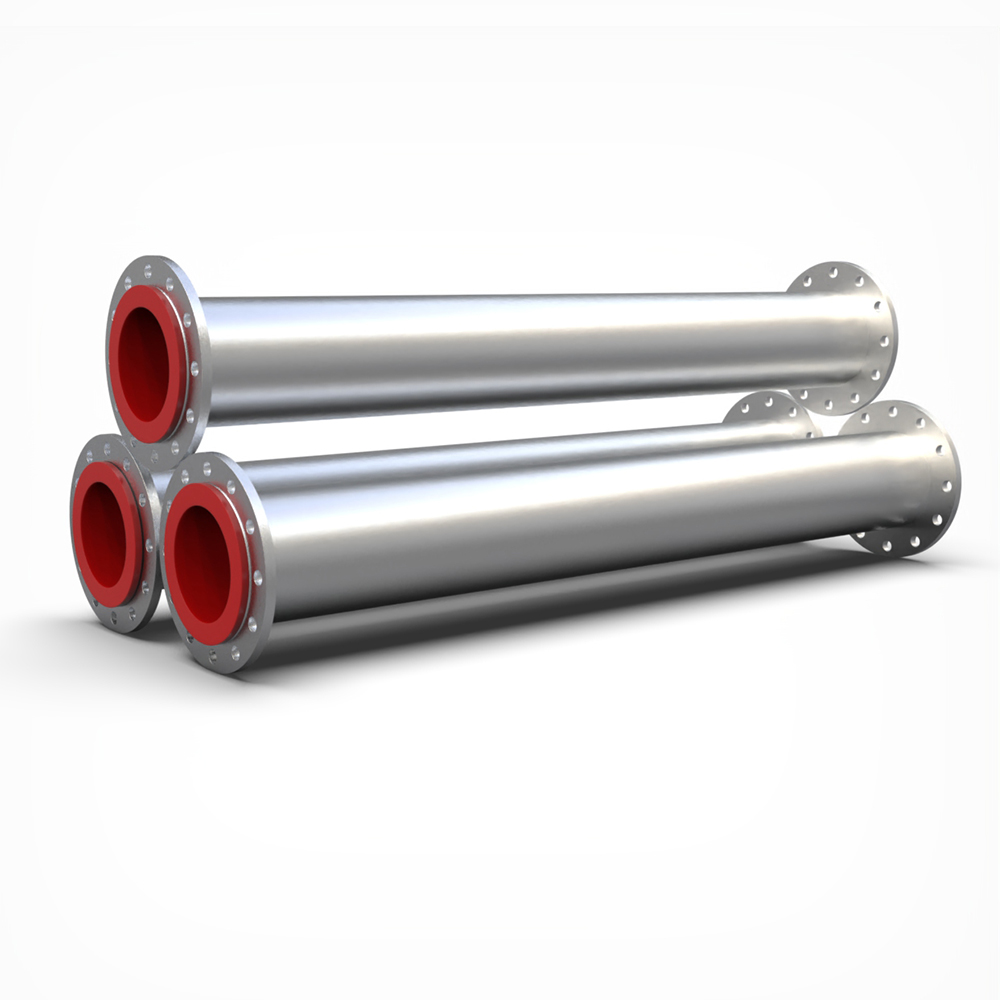
Material selection heavily influences maintenance intervals. Natural rubber offers high resilience for fine, sharp particles but remains susceptible to tramp metal damage and hydrocarbon degradation. Polyurethane provides excellent general wear resistance and ease of replacement, though it is temperature-limited and vulnerable to hydrolysis in specific pH ranges. Alumina or Silicon Carbide delivers maximum lifespan for highly abrasive, coarse environments, but its brittle nature makes it susceptible to thermal or mechanical shock from tramp metal impact. Using polyurethane lined pipe in the feed manifolds often complements the cyclone liners by providing a continuous wear-resistant flow path.
Liner Material | Best Application | Primary Vulnerability | Expected Lifespan (Relative) |
|---|---|---|---|
Natural Rubber | Fine, sharp particles | Tramp metal, hydrocarbons | Moderate |
Polyurethane | General wear, easy swap | High temps, extreme pH | Moderate to High |
Ceramic (Alumina/SiC) | Highly abrasive, coarse ore | Mechanical shock, brittleness | Very High |
Executing a cost-to-lifespan analysis determines the most efficient maintenance action. Teams must decide whether to patch a minor liner gouge, rotate a cone section to even out localized wear, or execute a full replacement. This decision hinges on the remaining operational hours until the next major planned shutdown and the current wear rate of the component. You want to avoid mid-run shutdowns at all costs.
Roping in the underflow is a critical failure state that requires immediate intervention. Step-by-step diagnosis involves checking for an oversized apex, excessive feed density, or a partial blockage in the spigot. Immediate corrective actions, such as diluting the feed or clearing the apex, are necessary to restore proper classification. If you ignore roping, coarse material floods downstream equipment and bogs down the entire circuit.
Blockages in a desliming cyclone disrupt the entire desliming circuit. Identifying the root cause is the first step. You must determine if it is tramp material, oversized feed from a damaged screen, or a collapsed internal liner. Executing safe, depressurized clearing procedures ensures personnel are not exposed to sudden releases of trapped, high-pressure slurry during the unblocking process. Never hammer on the cyclone body to clear a plug; this shatters internal ceramic liners instantly.
Pressure drops and feed fluctuations often point to upstream instability rather than a cyclone failure. Correlating cyclone pressure anomalies with upstream issues involves investigating sump level control loops, variable speed drive pump wear, or severe pipeline scaling. Stabilizing the feed presentation is mandatory before assuming the cyclone internals are at fault. A cyclone only classifies as well as the feed it receives.
Overcoming data silos is a major hurdle in adopting a standardized inspection program. Keeping inspection records in isolated spreadsheets prevents reliability engineers from conducting long-term wear analysis. Integrating wear tracking directly into a centralized maintenance database ensures that all stakeholders have visibility into equipment health. Metallurgists and maintenance planners need to look at the same data to make effective decisions.
Adapting the checklist from a single standalone unit to a large-scale radial cyclone cluster requires careful scalability. In a spider distributor setup, manifold pressure balancing is critical. Inspections must account for uneven feed distribution. Poor distribution causes cyclones on one side of the cluster to wear significantly faster than those on the opposite side. You must inspect the distributor internals just as rigorously as the cyclones themselves.
Mitigating subjective wear assessments requires addressing training and skill gaps. Training personnel on standardized measurement techniques using the correct tooling ensures data consistency. Providing visual reference guides that clearly illustrate acceptable versus unacceptable wear eliminates guesswork. This empowers technicians to make confident replacement decisions on the floor without waiting for engineering approval.
Consistent, documented inspections drive metallurgical recovery, downstream grinding efficiency, and MSHA compliance. Shifting from reactive part replacement to a structured, condition-based monitoring program protects the plant from catastrophic failures. You optimize the entire classification circuit by knowing exactly when a component will fail and replacing it just before it does.
Take the following actions to optimize your separation equipment:
Audit the current state of operational cyclones using a standardized baseline measurement protocol.
Transition all paper-based field logs to a centralized, digital CMMS platform to eliminate data silos.
Consult with a metallurgical specialist to establish accurate, site-specific wear tolerances for your unique ore body.
Train maintenance personnel on proper ultrasonic thickness testing and visual wear identification techniques.
A: Optimal operating pressure varies based on cyclone size and target cut point. It typically ranges from 5 to 15 PSI for large cyclones and up to 40 PSI for smaller desliming units. Stable pressure is critical; fluctuations indicate feed issues that disrupt classification efficiency.
A: Replacement frequency depends heavily on ore abrasiveness and operating hours. In highly abrasive copper or gold circuits, rubber or polyurethane liners may require replacement every 3 to 6 months. Ceramic liners can last over a year under stable conditions.
A: Roping occurs when the underflow is overloaded with solids. This is often caused by an undersized apex, excessive feed density, or a partial blockage. It can be fixed by reducing feed density, clearing the blockage, or installing a larger apex.
A: First, isolate and completely depressurize the cyclone. Remove the apex assembly carefully. Use high-pressure water or specialized non-metallic clearing tools to dislodge the blockage. Never use metal bars or hammers, as they will gouge or crack the internal liners.
A: Polyurethane is lightweight and easy to install, making it ideal for general wear. Ceramic liners offer significantly longer wear life in highly abrasive, coarse applications. However, ceramic is brittle and prone to impact damage from tramp metal.
A: As the apex wears and its internal diameter increases, more water and fine particles report to the underflow. This decreases the underflow density, increases the circulating load to the mill, and sends poorly classified material downstream, reducing flotation recovery.


