

Views: 0 Author: Site Editor Publish Time: 2026-07-08 Origin: Site


Specifying the wrong industrial elastomer for high-stress applications carries severe operational and financial consequences. Material failure often leads to unplanned downtime, damaged equipment, and compromised safety protocols. Many procurement teams make the mistake of ordering a generic polyurethane sheet based solely on length, width, and thickness. They ignore essential variables like chemical formulation, durometer, and thickness tolerances. This oversight inevitably causes premature wear, machining difficulties, or catastrophic structural failure in the field.
Successful procurement requires a rigorous evaluation of mechanical loads, environmental exposure, and fabrication requirements. You must specify the exact formulation needed to withstand the unique demands of your application. Understanding how durometer interacts with load-bearing capacity and why dimensional tolerances dictate machining success will transform how you source these engineering materials.
Selecting a generic material without analyzing operational demands introduces massive risks to your production environment. Unplanned downtime is the most immediate consequence. When an underspecified elastomer fails, entire manufacturing lines grind to a halt. You face frequent replacement cycles that drain maintenance budgets and consume valuable labor hours. Material failure often transfers kinetic energy directly to the underlying machinery, causing permanent damage to expensive steel components.
Improper specifications directly cause specific failure modes. Delamination occurs when the material cannot handle shear forces or lacks the proper bonding agents. Compression set happens when a sheet is subjected to loads exceeding its elastomeric memory, leaving it permanently flattened and useless for shock absorption. Abrasive failure tears apart soft formulations placed in high-friction environments, shedding particulate into your processing lines.
Design engineers consistently specify a wear resistant polyurethane sheet to replace traditional materials like rubber, metals, and standard plastics. Rubber degrades quickly under chemical exposure and lacks high load-bearing capacity. Metals provide rigidity but offer zero shock absorption and generate excessive noise. Standard plastics crack under impact and cannot return to their original shape after deformation.
Polyurethane bridges these material gaps perfectly. It offers superior tear strength, allowing it to survive environments that shred conventional rubber. The material provides exceptional noise dampening, which helps meet workplace safety regulations in stamping or bulk handling facilities. Its non-marking properties protect delicate surfaces during manufacturing. Polyurethane retains its elastomeric memory under high loads, absorbing massive impacts and instantly returning to its original dimensions.
Before requesting a quote, you must document your operational demands meticulously. Start with the maximum load the material will bear, calculated in pounds per square inch (PSI). Identify the operating temperature range, noting both ambient conditions and friction-induced heat. Document all chemical exposure, including cleaning solvents, oils, and environmental moisture. Define the required lifespan of the component to establish realistic performance expectations.
Procurement and engineering teams must align on these baseline metrics. Creating a standardized specification document prevents miscommunication with manufacturers. This document should detail the exact physical environment, the type of mechanical stress, and the secondary machining processes required. Clear success criteria ensure you receive an engineered solution rather than a generic commodity.
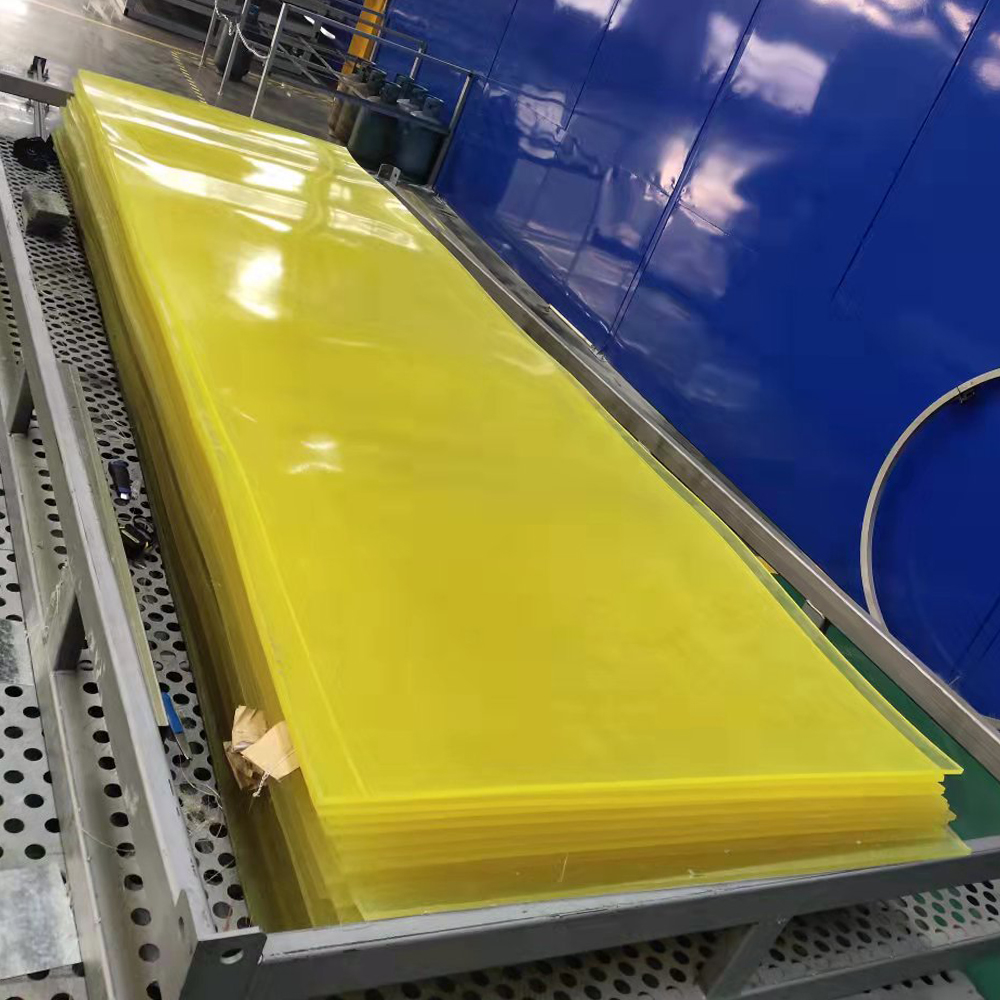
Durometer measures the hardness of a material and dictates how it responds to physical pressure. The industry uses two primary scales for elastomers. The Shore A scale measures flexible, rubber-like materials. The Shore D scale measures rigid, plastic-like materials. Understanding the transition between these scales is vital for proper specification.
A 60A durometer feels like a car tire tread. It is highly flexible and ideal for wiping seals, squeegee blades, and light cushioning. As you move up to 90A, the material becomes much firmer, resembling a skateboard wheel, suitable for heavy conveyor skirts. Crossing into the Shore D scale changes the physical characteristics entirely. A 75D durometer feels like a hard bowling ball. You specify 75D for heavy structural pads, metal-forming dies, and high-load bearings where deflection must be minimized.
| Durometer Scale | Hardness Feel | Common Applications | Key Characteristics |
|---|---|---|---|
| 60A - 70A | Car Tire Tread | Wiping seals, light cushioning | High flexibility, excellent shock absorption |
| 80A - 90A | Skateboard Wheel | Conveyor skirts, wear pads | Balanced durability and flex |
| 95A - 60D | Shopping Cart Wheel | Heavy duty rollers, gears | High load bearing, moderate impact resistance |
| 70D - 75D | Bowling Ball | Structural pads, metal-forming dies | Extreme rigidity, minimal deflection |
Specifying durometer requires analyzing the trade-off between structural rigidity and kinetic energy dissipation. High-density sheets provide excellent load-bearing capacity but sacrifice flexibility. If you place a 75D sheet under a rapid, sharp impact, it may transfer too much force to the underlying structure or even crack under extreme shock. Conversely, a soft 60A sheet will absorb the impact perfectly but may crush completely under a sustained heavy load.
You must match the durometer to the type of impact. Sharp, cutting impacts require a medium durometer with high tear strength to prevent gouging. Heavy, sustained loads require higher durometers on the Shore D scale to prevent compression set. Repetitive, high-frequency impacts demand a formulation with high rebound characteristics to prevent heat buildup and internal melting.
Thickness variations dictate the success or failure of mechanical assemblies. Industry-standard cast urethane sheets often feature wide thickness tolerances. A standard sheet might vary by ±0.030" or more across its surface. This variation is acceptable for basic bumpers or rough wear pads, but it is disastrous for precision engineering.
Precision casting methods guarantee tight tolerances. Manufacturers can achieve ±0.010" on standard 20" x 70" cast sheets using specialized leveling and curing techniques. For thin-gauge materials, advanced centrifugal casting or highly calibrated open casting on large 38.5” x 122.5” tables can hold tolerances up to ±0.005" over the entire surface. Centrifugal casting spins the liquid resin, using G-force to create a perfectly uniform thickness, while precision open casting relies on laser-leveled tables and exact volumetric pouring.
Tight thickness tolerances are mandatory for secondary operations. Water jet cutting relies on a consistent standoff distance between the nozzle and the material. If the sheet thickness fluctuates, the water jet loses focus, resulting in tapered edges and inconsistent cuts. CNC machining requires a flat reference surface; uneven sheets will shift in the vacuum chuck, ruining the part geometry.
Uneven thickness directly causes assembly alignment issues. When you stack multiple fabricated parts, a ±0.030" variation compounds quickly, throwing entire mechanical assemblies out of tolerance. This leads to rejected parts, wasted material, and massive labor overruns as technicians attempt to shim or modify the components to fit.
Polyether formulations excel in environments where moisture and dynamic flexing are present. The chemical backbone of polyether provides superior resistance to hydrolysis, meaning it will not degrade, swell, or lose its mechanical properties when continuously exposed to water. It also maintains high flexibility at lower temperatures compared to other formulations.
You should specify polyether for wet environments, marine applications, and outdoor equipment exposed to rain and snow. It is the ideal choice for dynamic, high-flex applications like drive belts or rapidly cycling bumpers. Polyether also offers high rebound, making it perfect for applications requiring the material to snap back to its original shape instantly after compression.
Polyester formulations dominate in environments involving harsh chemicals and sliding abrasion. The molecular structure of polyester creates a dense, tough material that resists swelling or breaking down when exposed to oils, fuels, and industrial solvents. It also exhibits a significantly higher resistance to sliding friction than polyether.
Specify polyester for scraper blades, snowplow edges, and oil-field applications. It performs exceptionally well in environments with high friction, such as grain handling chutes or aggregate sorting bins. If your application involves dragging heavy, rough materials across the surface while exposed to cutting fluids or hydraulic oils, polyester is the only viable choice.
| Feature | Polyether | Polyester |
|---|---|---|
| Hydrolysis Resistance | Excellent | Poor |
| Oil/Solvent Resistance | Fair | Excellent |
| Sliding Abrasion | Good | Outstanding |
| Low-Temperature Flex | Excellent | Fair |
| Dynamic Rebound | High | Low to Moderate |
The surface finish of an industrial polyurethane liner dictates how bulk materials flow through your system. A smooth, glass-like finish lowers the coefficient of friction, preventing sticky materials like wet clay or fine powders from adhering to chute walls. Conversely, a textured surface can be specified when you need to control the flow rate or provide grip in specific material handling zones.
Backing options are critical for installation. Gluing bare polyurethane to steel is notoriously difficult. Specifying a canvas or fabric backing allows for standard industrial adhesives to form a permanent bond with the substrate. For heavy-duty applications, an expanded metal backing embedded directly into the urethane allows the liner to be mechanically bolted or welded into place without tearing through the elastomer.
Standard polyurethane can be modified with chemical additives to survive extreme environments. UV stabilizers are mandatory for outdoor use; without them, sunlight will cause the material to become brittle and crack over time. Anti-static compounds are critical in electronics manufacturing or explosive environments like grain elevators, preventing the buildup of dangerous static charges during material flow.
Friction reducers fundamentally alter the material's surface properties. Adding Molybdenum Disulfide (MoS2) or Teflon powder directly into the liquid resin creates a self-lubricating sheet. This drastically reduces sliding friction and heat buildup, extending the life of wear pads and guide rails in high-speed packaging machinery.
Standard dimensions like 20"x70" or 38.5"x122.5" are readily available but often lead to poor material yield. When your final part dimensions do not nest efficiently within these standard footprints, you generate massive amounts of scrap. Fabricating a 12"x12" part from a 20" wide sheet leaves an 8" strip of wasted material that usually ends up in the trash.
High scrap rates carry severe cost implications. You pay for the raw material, the shipping weight of the waste, and the labor required to cut away the excess. In high-volume production, forcing standard sizes into incompatible part geometries inflates your per-part cost significantly and slows down the fabrication process.
Investing in custom dimensions becomes cost-effective when your scrap rate on standard sheets exceeds 15-20%. Ordering a sheet cast to your exact required width and length eliminates waste and reduces secondary cutting operations. The break-even point is easily calculated by comparing the premium of custom casting against the combined cost of wasted material and extra machining time.
Customization goes beyond simple dimensions. You can specify specific tapers for specialized wear blades or request dual-durometer sheets. A multi-layered sheet featuring a rigid 75D base for mechanical fastening and a soft 60A top layer for delicate material handling cannot be achieved with off-the-shelf stock. These engineered solutions streamline assembly and drastically improve component performance.
Bulk material handling destroys weak materials. When specifying sheets for chutes, hoppers, and conveyor transfer points, prioritize high tear strength and sliding abrasion resistance. A polyester formulation is mandatory here to withstand the continuous friction of aggregate, grain, or coal.
Focus on the fastening method during the specification phase. High-impact zones require expanded metal backing for secure bolting. Ensure the durometer is high enough to resist gouging from sharp rocks, but flexible enough to absorb the impact of materials dropping from conveyor belts. A smooth surface finish is required to prevent material bridging and maintain consistent flow rates.
Heavy machinery protection requires a completely different approach. Die-cutting pads, press brake dies, and heavy equipment bumpers demand extreme load-bearing capacity. High-density polyurethane acts as a shock-absorbing barrier, protecting sensitive internal components and the delicate surfaces of adjacent machinery from crushing forces.
Focus heavily on compression set resistance. If the material flattens out after the first impact, it offers no further protection. Specify high Shore D durometers to handle massive tonnage. Precision thickness is critical here; if a press brake die pad varies in thickness, the resulting metal bend will be uneven and out of tolerance.
Machining elastomers presents unique challenges compared to cutting metal or rigid plastics. Polyurethane generates significant heat during milling or turning. Because it is an insulator, the heat does not dissipate into the chip; it stays in the material, causing it to melt and gum up the tooling. Material deflection is another major issue. Soft durometers will push away from the cutting tool, resulting in undersized holes and inaccurate dimensions.
Mitigate these risks by using specialized tooling and techniques. Use razor-sharp, single-flute cutters with high rake angles to slice rather than plow through the material. Employ coolant or cold air guns to manage heat generation. When turning soft urethane on a lathe, freeze the material beforehand to temporarily increase its rigidity and achieve a cleaner cut.
Thermal breakdown is a catastrophic risk. If operating temperatures exceed the material's glass transition or melting points, the urethane will revert to a liquid state or become permanently brittle. Friction-induced heat in high-speed applications often pushes the material past its safe operating limits, even if the ambient room temperature is low.
Mitigate thermal risks by requesting comprehensive thermal testing data from the manufacturer prior to ordering. Ensure the continuous operating temperature rating of the specific formulation exceeds your maximum expected heat load. If heat is unavoidable, specify high-temperature formulations or integrate friction-reducing additives like MoS2 to lower the surface temperature during operation.
A: Precision cast sheets typically hold thickness tolerances of ±0.010" on standard sizes. For thin-gauge materials cast on specialized laser-leveled tables or via centrifugal casting, tolerances can reach up to ±0.005" over the entire surface.
A: Choose polyether for wet environments, cold temperatures, and applications requiring high rebound due to its excellent hydrolysis resistance. Choose polyester for environments with sliding abrasion, oils, fuels, and industrial solvents.
A: Yes, but only if the sheet has tight thickness tolerances. Uneven thickness causes the water jet to lose focus, resulting in tapered edges and inconsistent part dimensions. Precision cast sheets are highly recommended for water jetting.
A: For high sliding abrasion, a durometer between 80A and 90A is typically ideal. It is hard enough to resist tearing and gouging from rough materials but retains enough elastomeric memory to absorb minor impacts without cracking.
A: No. Higher-density (Shore D) sheets offer better load-bearing capacity and structural rigidity but sacrifice flexibility. Lower-density (Shore A) sheets provide superior shock absorption and kinetic energy dissipation but may crush under extreme static loads.
A: Exceeding the material's maximum operating temperature causes thermal breakdown, leading to melting, loss of tensile strength, or permanent brittleness. Always verify the continuous operating temperature rating of the specific formulation before installation.


